Showing posts with label shakespeare. Show all posts

Friday, April 7, 2017

Script Reading Roundup: Foote, Shakespeare, Goldman

In this month's edition of Script Reading Roundup (brief thoughts on plays that I've read): three plays about British Isles royalty and one play about a little old lady from Texas.

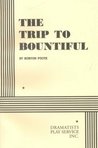
The Trip to BountifulThe Trip to Bountiful by Horton Foote
My rating: 4 of 5 stars

“I’ve waited a long time. Just to get to Bountiful. Twenty years I’ve been walkin’ the streets of the city, lost and grieving. And as I’ve grown older and my time approaches, I’ve made one promise to myself, to see my home again… before I die…”

Such is the premise of Horton Foote’s elegiac drama The Trip to Bountiful. Mrs. Carrie Watts lives in a cramped apartment in Houston with her kind but weak-willed son Ludie and her frivolous, overbearing daughter-in-law Jessie Mae. For years, she has been trying to sneak away to her East Texas hometown, Bountiful, and each time, her relatives catch her before she can leave Houston. But one day…

The Trip to Bountiful is largely a touching character study, but there is a surprising amount of suspense as we watch to see how Mrs. Watts will make her escape. I also liked how Mrs. Watts is kind of an opaque figure during Act One (which is dominated by Jessie Mae’s chattering) but comes into her own when she sets out on her journey.

Admittedly, it’s disconcerting to see that according to the stage directions, Mrs. Watts is only 60. She seems much older than the 60-year-old women I know nowadays; indeed, in recent productions, the role is often taken by a more elderly actress. (Cicely Tyson was 88 when she played Mrs. Watts on Broadway in 2013!) At any rate, it is a lovely role for an older lady who can project an unpretentious, middle-American dignity. It is not a “diva” role; quite the opposite.

Another Southern writer famously said “You can’t go home again.” The Trip to Bountiful complicates that statement: when Mrs. Watts returns to Bountiful, she finds it diminished, abandoned, a ghost town. But nonetheless, it is still home.

MacbethMacbeth by William Shakespeare
My rating: 4 of 5 stars

All right, Shakespeare, you win: I don’t hate Macbeth. But it took me a long time to get to this point. As a teenager, I saw a terrible production of Macbeth and then acted in a terrible production of Macbeth; later, I saw a few more productions that didn’t do much to change my prejudiced mind, and wrote an essay about how Macbeth is the most over-produced Shakespeare play merely because every middle-aged white male actor thinks he should play the Thane of Cawdor. By that point, my hatred of Macbeth had hardened into a kind of shtick: I found it amusingly contrarian to say I hated this play that everyone else seems to adore, so I played up my dislike for it.

But I’m nearly 30 now, so the time has come to put away childish things and admit on the Internet that Macbeth is never going to be my favorite Shakespeare play, but I certainly don’t think it’s bad.

How did I get to this point? Seeing Sleep No More in New York City helped—it’s not every Shakespeare play that lends itself to transformation into a physical-theater gothic-noir haunted house. The introduction to the Pelican Shakespeare edition helped, or at least allowed me to forgive my high-school drama teachers for not doing any cross-gender casting (which resulted in me playing a non-speaking ensemble member while boys who couldn’t speak blank verse played all the thanes). The Pelican editor, Stephen Orgel, digs deep into how the play presents women as a disruptive or antagonistic force, and managed to convince me that putting female thanes in Macbeth might well make a hash of its themes. Reading Harold Bloom’s Shakespeare: The Invention of the Human helped; one of my objections to Macbeth was always that the minor characters do not have much personality, but Bloom suggests that that’s intentional. If the “secondary males in the play” are “wrapped in a common grayness,” Bloom says, it is only so that we more readily identify with Macbeth and “journey inward to [his] heart of darkness.” Or, in other words: Marissa, stop thinking that you’ve found a flaw in Shakespeare; the man was a genius and he knew exactly what he was doing.

So, all right: assuming that competent actors play them, Macbeth and his Lady are fascinating characters. The play moves swiftly and its language obsessively focuses on a few major threads of imagery: blood, shipwrecks, birds, sleep, nighttime and darkness. That imagery, plus the supernatural elements, give Macbeth a unique atmosphere among Shakespeare’s plays, even though I hate it when productions focus on the supernatural bits at the expense of everything else. (A pitfall that has beset Macbeth almost from the start, it seems; the Hecate character is an interpolation by Thomas Middleton. Jacobean audiences couldn’t get enough of those witches!) The scene where Macduff learns the news of his family’s death will wreck me every time. And, even though we know Macbeth is a murderous tyrant who deserves what’s coming to him, Shakespeare somehow makes us sympathize with his paranoia, terror, and nihilism.

I still think Macbeth is not a great choice to produce in a high school or college setting. And I still think there are probably too many productions of it overall.

But no, I don’t hate it.

CymbelineCymbeline by William Shakespeare
My rating: 3 of 5 stars

I can’t recount the plot of Cymbeline out loud without bursting into giggles. Which is kind of odd: this play is not really considered a comedy in the same way as A Midsummer Night's Dream or Twelfth Night are, yet I can describe the stories of those plays with a straight face. Cymbeline, though… when I try to explain the sequence of events that result in the heroine waking up next to a headless body and mistaking it for that of her husband, I can’t stop laughing.

As other people have said, this play feels like what would result if you fed all of Shakespeare’s other plays into an extremely intelligent super-computer and asked it to produce something “Shakespearean.” It’s easy to imagine that Shakespeare knew he was at the end of his career and decided to play around with his pet motifs, including some winks at the audience. I mean, the play begins with two unnamed lords saying, basically, “Remember when King Cymbeline’s two little boys vanished without a trace? I wonder what happened to them.” (Gee, do you think that’ll become important later on in the story?) And by the end, Shakespeare has thrown so many plotlines into the play that it takes a scene nearly 500 lines long to resolve everyone’s story.

Very little in Cymbeline is profound, but a lot of it is awfully fun. Princess Imogen is a delightful heroine, the role of the self-involved dolt Prince Cloten can be hilarious in the right hands, and there are many other nice opportunities for comedians and character actors. The most difficult role is probably that of Imogen’s husband Posthumus, because it’s very hard to feel sympathy for him after he makes a wager on his wife’s fidelity. (One possible solution, which I saw in a production in summer 2015: portray Posthumus as extremely drunk at the time he makes the wager.) Overall, I think Cymbeline can be a charming, amusing, and unexpected choice for summertime Shakespeare in the Park companies, or for high schools who don’t want to stage Twelfth Night or Midsummer for the umpteenth time. Because, trust me, it’s as funny as either of them.

The Lion in WinterThe Lion in Winter by James Goldman
My rating: 5 of 5 stars

Where has The Lion in Winter been all my life? Why didn’t I read it when I was 16 years old and equally obsessed with Shakespeare’s Antony and Cleopatra and Edward Albee’s Who's Afraid of Virginia Woolf? (It really reads like a cross between those two plays.) As a lover of eloquent dialogue, larger-than-life characters, handsome men and strong women, why did I wait so long to encounter this brilliance?

James Goldman’s play is based on real-life political intrigues involving King Henry II, Queen Eleanor of Aquitaine, their three ambitious sons, and the French royal family, though with dramatic license taken to make it juicier. Taking place over a period of less than 24 hours, the plot is a complex swirl of alliances, manipulations, and betrayals, with various territories, marriages, and thrones used as bargaining chips.

Goldman makes no attempt to write dialogue that sounds “medieval,” or to replicate the exact circumstances of court life in 1183. (The royal family decks the halls with Christmas holly themselves—there are no servants or minor courtiers to be seen.) But at the same time, he grants his characters their full measure of dignity and charisma. He humanizes them but he does not cut them down to size. They are wittier, more attractive, more passionate, more conniving than everyday people, and I love all of these glorious monsters.

In one of the play’s most famous lines, Eleanor shouts “Of course he has a knife. He always has a knife. We all have knives. It is eleven eighty-three and we’re barbarians.” And indeed, the metaphor I keep thinking of to describe this play is a jeweled dagger. It is elegant and cutting, hard and glittering, extravagant and yet just right.

Tuesday, March 21, 2017

After All, Miss, This is France: Historical Accuracy and the New "Beauty and the Beast"

I saw the new live-action Beauty and the Beast on Saturday and I've been overthinking it ever since. (This is what happens when a bookish Millennial girl with degrees in Drama and French sees a remake of a beloved childhood classic about a bookish French girl.) So I have a few things to say about the adaptation, the changes it makes, and its historical accuracy or lack thereof.

Are you reading Shakespeare there? (CGI) Dan Stevens as the Beast, Emma Watson as Belle.
I appreciated some of the changes to the new version: the filling in of plot holes, and the attempt to show more of how Belle and the Beast's relationship develops. To that end, the filmmakers have included scenes where the characters bond over Shakespeare. (Belle is pleased to be living with a fellow book-lover and reads to the Beast from Midsummer's "Love looks not with the eyes but with the mind" speech.) Cute, but also rather anachronistic. In France in the 1700s, it's just possible that the Beast might have translated versions of Shakespeare's plays in that vast library of his, but it's unlikely that both he and Belle would revere Shakespeare above all other authors. At that time, the French still saw Shakespeare as déclassé, an uncultured Englishman writing sprawling plays that did not respect the all-important Three Unities. Belle and the Beast would be much more likely to read and discuss literature from their own country: the plays of Racine and Corneille, or maybe the essays of Montaigne. It's fun to imagine them reading Corneille's The Illusion, a play that has themes about artifice and looking deeper, and features a magic mirror that can show you what your loved ones are doing! (Also, it's a delightful play that was far ahead of its time.)

Another change in the new version is the addition of a lot of unnecessary backstory about Belle's family. We learn that Belle and her father Maurice moved to their "provincial" village when she was a baby, after her mother died of the plague. At first, this sounds slightly odd: wasn't plague a medieval disease, and doesn't this movie take place in the 1700s? (Why not smallpox or tuberculosis?) However, there were scattered outbreaks of plague long after the medieval Black Death epidemic, including a really devastating one in Marseille in 1720 (the Great Plague of Marseille). And if we assume that that outbreak killed Belle's mother, and further assume that Belle is about 20 years old when the main action of Beauty and the Beast takes place, we can pinpoint the exact setting of the film as 1740 — which was the year the original French "Beauty and the Beast" fairy tale was published! Brilliant!

The only problem with this theory is that the film makes clear that Belle and Maurice are from Paris, not Marseille, and as far as I can tell from Wikipedia, there were no Parisian plague outbreaks in the 1700s. I am left angrily shaking my fist at the screenwriters: "It would have been so easy to say they are from Marseille and not Paris and it would have been a great Easter egg for us history nerds!"

I suspect that both of these matters — having Belle and the Beast discuss Shakespeare, and saying that Belle and Maurice come from Paris — can be traced to a larger problem with movies made for mass audiences: the fear of including information that isn't 100% familiar to everyone. Belle and Maurice are Parisian, not Marseillais, because American audiences can be trusted to know where Paris is but may have never heard of Marseille. Belle and the Beast read Shakespeare, not Racine or Corneille, because those French authors are not part of Anglo-American culture. (I do like that they also show the Beast reading Arthurian romances; this strikes me as historically plausible, understandable to a modern American audience, and not quite as much of a lazy choice as Shakespeare.) Perhaps this is even why Belle's mother dies of the plague, rather than of something like tuberculosis. I suppose I shouldn't be looking to a nostalgia-flavored Disney remake to expose people to unfamiliar ideas, but it makes me sad when mass culture doesn't take the opportunity to try to tell a mass audience something they may not have heard before.

Tuesday, March 7, 2017

We'll Serve Anyone (Meaning Anyone) At All


I was rereading Macbeth this weekend and realized that the conceit of the Porter's first speech is basically the same as that of "A Little Priest" from Sweeney Todd -- making grimly satirical jokes about various British professions, that is, though in a context of damnation rather than cannibalism.

Monday, May 9, 2016

As a Stranger, Give It Welcome

Last Friday night at Shotgun Players, as I stood on the front steps drinking champagne and waiting for the house to open, a middle-aged woman walked by, glanced at the building, and asked me if this was a theater. I told her that it was.

"I pass by here all the time but I've never gone in."

She had obviously just come back from a trip to the corner store. She was carrying a big jug of Arizona Iced Tea.

"How much do tickets cost?" she asked.

"I'm a subscriber," I said. "I honestly can't remember what I paid." As I said that, I realized it's a cop-out; I realized I'm embarrassed about theater ticket prices and have a whole lot of complicated feelings about money and class.

Nonetheless, she continued to look intrigued. Tentatively, she went up the front steps. I heard her ask another woman "What do tickets cost?"

"I think they start at thirty-seven fifty, and they're all sold out for the run," said the other woman, who looked exactly like you'd picture a late-middle-aged Berkeley theater-going matron to be. "But I have an extra one that I've been trying to give away. My friend isn't coming."

"For free?"

"For free."

And just like that, the woman with the jug of iced tea got to see an experimental production of Hamlet, for free, on a whim. The whole exchange made me even giddier than the champagne did and restored my faith in humanity. I hope she enjoyed the show. I hope this was a magical Friday night for her and the first of many theater adventures to come. I thought about her a few times as I watched the play, especially during the following exchange:

"This is wondrous strange!" says Horatio, upon seeing the ghost.

Hamlet replies: "And therefore, as a stranger, give it welcome."

Tuesday, January 20, 2015

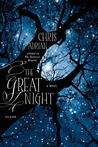
"The Great Night" by Chris Adrian: San Francisco as Faerieland

Five years ago, I got all excited when I heard that acclaimed novelist Chris Adrian was working on a book that imagined the faeries from A Midsummer Night's Dream under Buena Vista Park in contemporary San Francisco. The novel in question, The Great Night, came out in 2011, and I finally got around to reading it this month...

The Great NightThe Great Night by Chris Adrian
My rating: 4 of 5 stars

In order to love The Great Night, it probably helps to be a San Franciscan, to have pledged your heart to this hilly, foggy, colorful, magical city. It probably helps to be heartbroken, or at least trying to get over a painful loss. It helps to be the kind of person who bursts out giggling when introduced to three faerie characters named "Lyon," "Oak," and "Fell," realizing that while these are good names for faeries, they are also the names of streets near Buena Vista Park, where the story takes place. It helps to have ridden the N Judah downtown every weekday for the past six years, traveling through the tunnel under Buena Vista Park every morning and evening, and to experience this commuter-train journey with a new sense of wonder as you read about Oberon and Titania holding court in a fantastical palace under this hill. It probably helps, too, to be a theater-lover, whose first experience with Shakespeare was A Midsummer Night's Dream; to have recently written a short play yourself about dryads, oak-tree nymphs, and thus appreciate the novel's depiction of a faerie oak...

I can try to look at this novel more objectively, of course. I can recognize that it isn't perfect, though I may be close to a perfect reader for it, or have discovered it at the right time in my life. The main action takes place on Midsummer Night in 2008, but at least half of the book is taken up with flashbacks that fill in the backstories of its human and faerie characters. The three main human characters, Molly, Will, and Henry, are all about 30 years old and have suffered two major tragedies in their lives -- one during adolescence and one more recently. And the laying-out of their backstories can seem overly schematic, not to mention depressing; clearly, Chris Adrian wants to explore themes of grief and suffering and healing, but sometimes the characters seem like no more than the sum of their misfortunes. The faerie queen Titania, meanwhile, has suffered the greatest loss of all: her changeling son died of leukemia at UCSF hospital, and in her grief, she drove her husband Oberon away.

Though billed as a contemporary take on A Midsummer Night's Dream, The Great Night also seems to draw inspiration from other, later Shakespeare plays. While the rude mechanicals in Midsummer are preparing a play to entertain the king, the band of homeless theater-makers in Adrian's novel wish to "catch the conscience of the king," or rather, the Mayor, with their production of a musical version of Soylent Green. (They are convinced that the Mayor is killing homeless people and turning their bodies into the food served at homeless shelters. This is all the funnier if you pick up Adrian's clues that the mayor in question is Gavin Newsom, S.F.'s slick scion of privilege.) And the novel's focus on themes of grief and loss does not recall the lighthearted Midsummer so much as more "mature" Shakespeare plays like King Lear and The Tempest.

This is an ambitious novel, mixing realism and fantasy and humor and sorrow, shifting its point of view every few pages -- and I can acknowledge that it doesn't always work. But mostly, I'm just so happy to see my San Francisco, the 21st-century Mission and Haight and Sunset, captured in fiction so well and so lovingly. (I love Tales of the City, but it mostly takes place in Russian Hill and Pac Heights, neighborhoods where my friends and I rarely have cause to venture.) Descriptions of the faeries sprucing up a sterile hospital room, or Titania's bad blind date with a Marina bro, feel funny and painful and, in spite of everything, true. Because this feels like the kind of city where such things can happen.


View all my reviews

Tuesday, January 7, 2014

Prose Is Not Verse (Even If It's Shakespeare)

I've written before that when The New Yorker prints "vocal chords" instead of "vocal cords" (something I have witnessed twice), it makes me think that the world is going to hell in a handbasket.

And now I have witnessed an even more shocking error in this publication, which caused me to throw down the magazine and storm off to blog about my fury.

From Hilton Als' review of Twelfth Night (in the Nov. 25, 2013 issue): "Olivia dodges the entreaties of her visitor, a youth whom her steward, Malvolio (Stephen Fry), drolly describes as 'not yet old enough for a man, nor young / enough for a boy, as a squash is before 'tis a peas- / Cod, or a codling when 'tis almost an apple.'"

Do you see what happened there? The magazine printed Shakespearean prose as though it were verse! Dividing the word "peascod" with a slash and a hyphen, even, for no apparent reason! (Shakespeare will enjamb lines of verse, but he never splits a word down the middle between lines of verse.) But there's no verse structure, no rhythm or meter, underlying these words! It's prose, dammit!

Who's to blame, I wonder? This suggests that the magazine's head theater critic, or possibly his editor, doesn't know the difference between prose and blank verse (or perhaps they mistakenly think that all of Shakespeare is written in verse). Which is a disturbing thought, to say the least.

Especially because when I heard Hilton Als speak in 2009, he suggested that "plays should be treated as literature" and that it's therefore OK to read them instead of seeing them. (A very strange attitude for a theater critic to take, I thought.) And if you are reading a Shakespeare play, rather than seeing it, you should definitely be able to tell the difference between verse and prose!

So I hope that this error is just the work of some entry-level bozo at the copy-editing desk, so I can go on with my faith in The New Yorker undimmed. (And there are some nice insights and turns of phrase, as well as an appreciation for the "poetic reality" of live theater and the craft of acting, in the rest of Als' review.)

Monday, December 23, 2013

Macbeth is a Middle-Aged White Guy @ SF Theater Pub Blog

Over at the San Francisco Theater Pub blog I lay out my theory of why Macbeth gets produced so much more frequently than the other "great" Shakespearean tragedies: because Macbeth is a middle-aged white guy. It's a simple explanation, but not necessarily an obvious one. (I haven't heard anyone make this argument before, and was pretty pleased when I came up with it.) Agree? Disagree? Go over to the Theater Pub blog and tell me about it in the comments.

Bonus links:
My 2008 review of Patrick Stewart's Macbeth
A post from 2007 in which I discuss the three productions of Macbeth I had seen up to that date (Oregon Shakespeare Festival, high school, and college)

Sunday, August 25, 2013

Confessions of a Copy-Editor @ SF Theater Pub Blog

One reason that postings here have been so intermittent is that I've been busy this summer copy-editing two anthologies of plays:
  • the Bay One Acts anthology, which will be available for sale in the lobby and is also a reward for our Kickstarter donors. A $25 donation gets you a ticket to the festival AND a copy of the anthology. Such a deal!
  • Heavenly Bodies, an anthology of plays from the 2011 Olympians Festival, including my own Pleiades. Needless to say, I'm really excited about this one, and will post more details (publication date, etc.) as I have them.
And, for my latest Theater Pub column, I decided to write about my adventures as a copy-editor of play anthologies. Read all about it!

I've spent so much time copy-editing lately that it affects the way I see the world. I've become ever more conscious of typos in the things I read for pleasure. Moreover, after I read that New York Times article about new research indicating that Shakespeare wrote some 325 lines of The Spanish Tragedy, my takeaway was "Just think, if copy-editors had existed in Jacobean England, we wouldn't have this proof." (The text of these lines is riddled with errors and misprints, but the researcher thinks that most of them came about because the printers had trouble reading Shakespeare's messy handwriting.) So perhaps I shouldn't beat myself up if an occasional typo slips into the books I edit? Writers' typos and errors are unique, personal signatures; and as a copy-editor, you develop a very intimate relationship with the text.

And two different friends recently sent me that Onion article about "4 Copy Editors Killed in Ongoing AP Style, Chicago Manual Gang Violence." Thing is, though, I'm a freelancer. I have no stylebook. I make my own rules. I'm an outlaw gunslinger, and it's a lonely world.

Sunday, May 5, 2013

The Goddess from the Machine in Berkeley Rep's "Pericles"


Readers of this blog probably know what the term "deus ex machina" means and where it comes from. But just in case you don't... it literally means "the god from the machine," and it refers to the practice, in ancient Greek and Roman theater, of lowering an actor dressed up like a god onto the stage using a giant crane, and having the god or goddess character resolve the plot just when everything seemed hopeless. Nowadays, of course, we use the term in a looser sense, for any contrivance that comes in at the end of a story to wrap up the plot in an arbitrary way. (I also have a long-standing fascination with the term because my first play was titled Deus ex Machina.)

We've all seen plays and stories that employ a deus ex machina in the second, looser sense -- but I never expected that I would ever see a real "god from the machine" being hoisted onstage via a crane.

And then I saw Pericles at Berkeley Rep last Sunday. As Pericles is not one of Shakespeare's strongest or most psychologically intriguing works, Mark Wing-Davey's production gains its interest from its lively staging, performed by an ensemble of eight actors. There are masks, there are puppets, there's a platform on springs that doubles as a bed (for a sex scene) and the deck of a ship (for a storm scene)... and there's a giant crane that swings round at various moments to pluck something offstage or lower something on.

The script of Pericles incorporates a shameless deus ex machina: the goddess Diana appears to Pericles in a dream and tells him where he can find his long-lost wife. And, as I said, the crane got quite a workout during the production: most memorably, in the scene where Marina is suddenly kidnapped by smugglers, the actress got trapped in a big net and then hoisted into mid-air.

So I really should've seen it coming, that this production would employ the crane one final time, for the deus ex machina scene at the end of the play. Nonetheless, I was amazed and delighted when Diana swung into view, dangling from the end of the crane and giving her wisdom to Pericles.

My boyfriend, even though he is a classics scholar, professed to be disappointed by the effect. He said it looked very inelegant, to have the goddess dangling from the crane like a sack of potatoes.

"But that's the way it would've looked in ancient Greece," I said. "Though they wouldn't have said 'sack of potatoes' because potatoes are a New World food..."

Perhaps audiences these days are accustomed to more elaborate, smoother flying effects, using the latest technology. But I was thrilled to see a bit of ancient theater history repurposed for a 21st-century production.

Pericles plays at Berkeley Rep through May 26.

Photo: Jessica Kitchens as Thaisa, David Barlow as Pericles, Anita Carey as Gower. (There are no pictures available online of Diana on the crane, so I selected this photo instead -- because Ms. Kitchens also plays Diana, and isn't her Thaisa costume gorgeous?) Photo courtesy of mellopix.com.

Wednesday, March 7, 2012

Sketchy Shakespeare

A college friend of mine recently started a blog called Shakesketch -- whimsical illustrations inspired by Shakespeare quotes.

I suggested "Egypt, thou knew’st too well / My heart was to thy rudder tied by the strings / And thou shouldst tow me after" from Antony and Cleopatra, with this as the result:


Go over to Shakesketch to check out the other illustrations and send your own favorite Shakespeare quote to the artist!

It really is a great daily reminder of the richness of Shakespeare's language and metaphors.

Saturday, November 27, 2010

"The Tempest" at Cutting Ball: A Freudian Wet Dream

The Cutting Ball Theater opened its 2010-2011 season with a three-actor version of Shakespeare's The Tempest. Taking place in a therapist's office at the bottom of a swimming pool.

Come again?

This was perhaps the most unusual directorial conceit of any Shakespeare production I've ever seen -- and I thought it was terrific.

(The usual disclaimers apply: I'm on the literary committee at Cutting Ball, think they are a fab bunch of people, and got invited to the gala opening of this production -- paid for my ticket, but still.)

As director Rob Melrose sees it, The Tempest is full of plots and subplots that reflect one another. To take an obvious example, Trinculo, Stephano, and Caliban plot to overthrow Prospero in a bumbling, comic fashion; while, fifteen years ago, Antonio and Alonzo successfully overthrew Prospero in a way that wasn't funny at all. Or, Prospero must relinquish his control over his daughter Miranda and his sprite-servant Ariel... both of whom are young, feminine figures who have grown under Prospero's care, and now clamor for freedom. Melrose writes in the playbill: "Our three-person Tempest hopes to illuminate the many connections between the characters, encouraging a reading of the play similar to Freud's reading of fairy tales, where some characters are treated as aspects of other characters."

This Tempest is a slippery production that allows resonances and double meanings; sometimes it requires you to hold two contradictory ideas in your head simultaneously. Are the characters on a Mediterranean island, or in a therapist's office? (The early scenes imply that Prospero is a psychoanalyst and Miranda is his patient -- she hallucinates the tempest that opens the play, writhing about on the therapist's couch. But this conceit seems forgotten for large chunks of the show.) Is it a story about a middle-aged patriarch (Prospero) who must relinquish his daughter (Miranda/Ariel) to the young man who loves her (Ferdinand/Caliban)? Or could all of the characters even be aspects of one person, and the whole play be the story of a man who must learn how to integrate his id (Caliban) with his superego (Ariel)?

I knew that this concept had the potential to confuse the audience -- even to confuse me, because I do not know The Tempest by heart. I've never studied it, and had seen only one prior production, at the Oregon Shakespeare Festival in 2001. (Tangent: When Julie Taymor's movie of The Tempest comes out next month, people will make a big deal that Helen Mirren plays the lead role as "Prospera." Well, OSF did this nearly 10 years ago. And it turned Prospera's usurping sibling into "Antonia.") Nonetheless, I didn't reread the play before going to Cutting Ball. I truly believe that good theater should be accessible to anyone, even if it is "experimental" theater, even if the audience hasn't "done their homework."

But I wasn't confused by the Cutting Ball production, except in the aforementioned sense of having to hold two contradictory ideas in my head simultaneously -- which is, I think, intentional confusion, a workout for the brain, rather than incoherence. The brilliance of Shakespeare's play still came across and the doubling threw certain themes into high relief, such as "is Man inherently good or inherently evil?" And I finally realized why the last words of the play are "set me free"; no other line could be more appropriate.

Much has been written about how The Tempest is Shakespeare's last play, and Prospero's magical artifice is a metaphor for the playwright's artifice, and Prospero's decision to renounce magic represents Shakespeare's farewell to the stage. The Cutting Ball production adds another layer by suggesting that therapy = magic = theatre. When I realized this, I was moved, perhaps because my roommate is in training to be a therapist and she and I have had many fruitful conversations about the intersections between therapy and theatre.

This is a very clever production, yet what amazed me the most is the way that the cleverness reinforced the themes and the emotion of the play, rather than detracting from it. One could say that Melrose has "deconstructed" The Tempest, yet "deconstruction" implies something far colder and more clinical than this production. Melrose doesn't neglect the hilarity of the Trinculo and Stephano scenes, or the sweetness of the Miranda and Ferdinand ones -- though he does imbue them with other layers, due to the double-casting. For instance, there's a scene in the original script where Trinculo hides with Caliban under his overcoat when it starts to rain. When Stephano comes across them, he is confused to see four legs sticking out from under the coat, shivering from the cold. But Melrose stages this in such a way that you wonder: are they shivering, under that coat, or are they having sex? Because Trinculo is also Miranda, and Caliban is also Ferdinand, and Stephano is also Prospero...

There are two especially dazzling moments in the second act. First is the wedding masque Prospero stages for Ferdinand and Miranda. In this production, the masque is a fragmented, sped-up version of the play we have just seen: there are audio and video snippets of the actors reciting key lines from earlier scenes. Second is the climax, which is the only moment in the entire production when one of the actors must "have a conversation with himself" (i.e. switch rapidly back and forth between two roles, playing both sides of a dialogue). It's amazing, on a technical level, that Rob Melrose was able to adapt The Tempest for three actors and only require someone to "have a conversation with himself" the one time. But it's even more amazing on an emotional level. Along with the masque scene, it reinforces the themes of coming to terms with the different aspects of one's self, integrating the many roles one plays into a coherent whole. These scenes make everything fall into place.

Still, I realize that this production might best be understood by people who are familiar with other experimental theater, or have an affinity with abstract and dream-like art. (In his director's note, Melrose name-checks David Lynch, Christopher Nolan, and Haruki Murakami.) If I were younger, I think I would have complimented the production by saying "it was really cool how the actors were able to each play so many different roles." Well, it is cool. But the point of the doubling is not just to prove that Cutting Ball's actors are virtuosos, or to do the play on the cheap--there's more to it than that.

Still, much credit is due to actors David Sinaiko (Prospero/Alonso/Stephano), Caitlyn Louchard (Miranda/Ariel/Gonzalo/Trinculo/Sebastian), and Donell Hill (Caliban/Ferdinand/Antonio). Sinaiko speaks the Shakespearean verse with great ease and naturalness; his is a more accessible, low-key Prospero than one might find in other productions. Louchard excels in a very difficult assignment: five different roles, and each one of them a character who is caught in the middle between Sinaiko and Hill. She makes each of her characters distinct, using different voices and physicalities, and also has a lovely singing voice in Ariel's songs. I found Hill most convincing when he played the genial Ferdinand (he also played the genial Mr. Martin in The Bald Soprano at Cutting Ball last year, again opposite Louchard) and didn't think he had quite enough twisted rage in him to be an ideal Caliban. But then, maybe that's the point of this production: every young man has potential to be both Caliban and Ferdinand.

I found Cutting Ball's three-actor Tempest weird and delightful, rich and strange, in the way that theater should be... and particularly in the way that any good production of The Tempest should be! O brave new world, that has such theatre in it! It is rough, but real, magic.

The Tempest has been extended at Cutting Ball through December 19.

Tuesday, September 14, 2010

I Have Strong Opinions About "Antony and Cleopatra"

Maybe I was setting myself up for disappointment. Ever since I saw an excellent, intimate, pared-down production of Antony and Cleopatra at the Oregon Shakespeare Festival in 2003, it has been my choice for "most underrated Shakespeare play." I preached the gospel of it to anyone who would listen. My senior-thesis play in college was a backstage drama about a production of A&C in the 1930s. And yet, in these seven years of loving Antony and Cleopatra, and developing some very strong opinions about it, I had never had the chance to see another production of it--it's so infrequently produced! I therefore was full of excited anticipation last Sunday, when a friend and I drove to Marin to see a matinée of Antony and Cleopatra at Marin Shakespeare.

But, you know, Marin Shakespeare is no Oregon Shakespeare Festival, and this production didn't stir me the way that the one I saw seven years ago did. In fact, it barely got a rise out of me, other than to make me revise my opinion of the script. I still think that Antony and Cleopatra is, on the whole, an underrated play. But I would now add that it is very tricky to pull off.

The Marin production just struck me as very superficial--unable to present the deeper resonances and contradictions of the story. Shakespeare's Antony and Cleopatra are both terribly, terribly flawed people who make fatal errors. In a sense, they are Too Dumb To Live, and Shakespeare includes a surprising amount of humor at their expense. But in another sense, when Antony and Cleopatra die, the poetry and beauty of the world is forever diminished. Octavius Caesar, who wins in the end, will certainly be a better leader than the irresponsible Antony. But he is a Roman bureaucrat; there is no romance in his soul. This mysterious, tragic dimension of the play was entirely missing from the Marin production; it was not clear that the world had lost something precious when the title characters died.

It has been said that Shakespeare's Cleopatra is "always acting." But that's not precisely correct. Cleopatra is indeed a highly theatrical, self-dramatizing character, and she probably puts on an act at least 95% of the time. But there has to be a few moments in the play where the mask drops and we see a different, more private Cleopatra: the tragic queen, not the jealous and lust-ridden woman. With Marcia Pizzo's Cleopatra, the mask never dropped. She certainly threw herself into the role with great energy, but she neglected to find the quiet, internal moments that would allow Cleopatra to break your heart.

In the playbill, director Lesley Schisgall Currier wrote of her decision to use "a mostly bare stage, and to trust that Shakespeare's words will evoke the glory of Rome and the glamor of Egypt." The trouble was that her direction seemed to expect the words to do all the work--and paid too little attention to things like narrative drive, taut pacing, and character through-lines. The result was a disjointed play, which is fatal, because Antony and Cleopatra is made up of a ton of short scenes. Also, the intermission came too early (1 hour into a 3-hour show). And, with a 17-person cast plus supernumeraries, why did all of the battle scenes have to take place offstage? Is it too much to ask to have a couple of guys run on and clash swords a few times?

Was anything noteworthy about this Antony and Cleopatra? Well, I thought William Ellsman was good in the role of Octavius Caesar; this character can easily come across as a boring stick-in-the-mud, but Ellsman somehow made him more interesting than that. And Cleopatra's peacock-feather skirt in her final scene was pretty eye-catching (I was reminded of the legendary "beetle" dress Ellen Terry wore to play Lady Macbeth).

Because Antony and Cleopatra is so infrequently done, I guess that's why I'm so annoyed to see a dull production of it. Yes, Shakespeare wrote a strong and complex play. But this production proves it's not foolproof: it needs direction that can tease out the script's deeper layers, make sense of its epic structure, and lead us to a heightened appreciation of Shakespeare's infinite variety.

Photo credits: Morgan Cowin.

Tuesday, November 24, 2009

Theatre Links, November 24

Monday, July 6, 2009

There Are Faeries In My Neighborhood


No, this is not the set-up for a tired joke revolving around the "there sure are a lot of gay people in San Francisco" thing. It's a reference to a short story by Chris Adrian, called "A Tiny Feast," which is, to crib a line from Shakespeare, "something rich and strange." (And which was published in The New Yorker in April, but I only now got around to reading.)

The quote from The Tempest is especially appropriate because "A Tiny Feast" is a twist on another Shakespearean fantasy, A Midsummer Night's Dream. The premise of the story is that Oberon and Titania and their band of faeries are living beneath Buena Vista Park in San Francisco (about a mile from my house), and have stolen a human child and left a changeling in his place. When the human boy gets leukemia and cannot be cured by faerie magic, they must disguise themselves as a mortal family and get him treated at UCSF Children's Hospital. This information comes out much more gradually in the story than I have written it here, of course. And what follows is brilliantly odd and imaginative and well-written and meaningful, too. As immortal faeries, Oberon and Titania have great difficulty processing their child's illness and the doctors' diagnoses. But how different is this from the disorientation that any parent feels when his or her child gets cancer?

Chris Adrian, aka Mr. Overachiever, is a critically acclaimed fiction writer, the possessor of a divinity degree from Harvard, and a pediatric oncologist at UCSF--so he knows whereof he speaks. And according to this interview, "A Tiny Feast" is not just a standalone story: Adrian is working on a novel that retells the story of A Midsummer Night's Dream in modern San Francisco. Anticipation! Because, just reading "A Tiny Feast" has got me to see my city as a new place--a magical place. When the N-Judah train tunnels through Buena Vista Park I now think to myself "There are faeries here, living right on the other side of these tunnel walls." I can only imagine what effect a whole novel of this will have on me.

Incidentally, what is it with UCSF physicians having amazing second careers as artists? Aside from Chris Adrian, there is a great band called Rupa and the April Fishes whose frontwoman, Rupa, also works as a doctor at UCSF. My god, they put the rest of us San Franciscans to shame.

Image: "A Fairy Flew Off with the Changeling" by Arthur Rackham.

Sunday, April 26, 2009

Happy Baptism, Billy S.!

Hundreds of years of convention dictates that we celebrate Shakespeare's birthday on April 23 (also the anniversary of the day he died) but we don't know his birthdate for a fact--all we know is that today, April 26, is the day that he was baptized. So, let's take a moment to celebrate, shall we? We have these plays, and that's so much more important in the long run than knowing the exact date their author was born, isn't it?

In 2016--just a few years away, really--I expect there will be a massive outpouring of interest in Shakespeare to commemorate the 400th anniversary of his death. Which got me thinking: this means that nearly all of Shakespeare's plays have also turned 400 within the last 15 years or so--and the remainder, such as The Tempest, will very soon follow. So why hasn't there been more of an interest in commemorating this? Why haven't I seen plays advertised as "The 400-Year Anniversary Production of Hamlet?" Sure, it sounds a bit crass and commercial to put it like that, but since the theater is a huckstering and commercial art form anyway, why not take advantage of this anniversary?

Furthermore--from a more idealistic standpoint--wouldn't it have been wonderful if at least one theater company, somewhere in the world, made an effort to produce each of Shakespeare's plays exactly 400 years after it was first performed? Yes, I know that the chronology of Shakespeare's works is disputed, so the order of performance would never be strictly accurate. But we do have a general idea of the order in which the plays were written, and it would be amazing for everyone involved--the artists and the audience--to be able to trace the evolution of Shakespeare's style in "real time," the way his original audiences did. Why didn't the Oregon Shakespeare Festival, or a similar organization, commit to this? (I assume this would have to be done by an established company, because it is a huge undertaking that would have to go on for about 20 years. Pleasant as it is to imagine a scrappy little theater company taking on this task, beginning in 1990 with an enthusiastic production of Henry VI part I, they'd probably fold by 1998 and the Henry IV plays.)

Maybe there is some theater company that's doing this--but if so, I haven't heard of it. Or maybe it's just a lost opportunity that I'm acknowledging too late to do anything about it.

As I said, I've never seen a "400th anniversary" production of any Shakespeare play, but I did see a 100th-anniversary production of Chekhov's The Cherry Orchard in 2004. In nearly every respect, it was a dreadful and misconceived endeavor, but the one part of it that really moved me is the speech where Gaev pays homage to the family bookcase:
But Lyuba, do you know how old this bookcase is? I pulled out the bottom drawer last week, and I looked, and there were some numbers burnt into the wood with a poker. This bookcase was built exactly one hundred years ago. So how about it? We could celebrate its centenary. It’s an inanimate object, but all the same, whichever way you look at it, it’s still a bookcase. […] Dear bookcase! Most esteemed bookcase! I salute your existence, which for more than a hundred years now has been directed toward the shining ideals of goodness and of truth. For a hundred years your unspoken summons to fruitful labor has never faltered, upholding, through all the generations of our family, wisdom and faith in a better future, fostering within us ideals of goodness and of social consciousness. (source)
Naturally, I could not help thinking about the one hundred years that Chekhov's play had endured and how it, too, is a monument to truth and to fruitful labor. I can only imagine that the effect would be similar if one was to hear some of Shakespeare's beautiful poetry that deals with the nature of time and memory and existence (e.g. "Age cannot wither her...") exactly four hundred years after it was first written...

Tuesday, March 31, 2009

Brothers in Black Suits: Hamlet and Thom Pain

The last two plays I saw were both one-man shows, and both more interesting examples of the genre than the typical "let me impersonate [insert name of dead celebrity] for two hours" thing. Also, I'm used to seeing one-man shows performed by older actors, probably due to an unspoken assumption that young actors lack the technique and/or the box-office draw to sustain a one-man show, but both these shows were performed by young, boyish-looking men, and both amply proved that they can play in the big leagues.

First, as I alluded to a couple of posts back, I went to see a one-man French adaptation of Hamlet, which sounds like it could be the punchline to a bad joke, but which I actually quite enjoyed. The full title of this show was Hamlet: la fin d'une enfance, meaning Hamlet: the end of a childhood, and the premise of it was that a modern-day young boy, whose mother has recently remarried, refuses to meet his new stepfather and instead locks himself in his room, acting out the story of Hamlet with his toys and bedroom furnishings. The adaptation thus tightly focused on the archetypal family drama of Hamlet's story--lots of prominence given to the scenes with Gertrude and Claudius and the ghost, and a major reduction in Polonius' and Laertes' stage time.

I once took a playwriting workshop with Glen Berger, who said that he tries to reduce every play he writes to a one-word gerund, in order to clarify its subject/theme. He also suggested doing this with other writers' plays. "I've even figured out the one-word gerund for Hamlet," he told us. "Acting." (How marvelously clever and smooth!)

And Hamlet: la fin d'une enfance really made that one-word gerund explicit. Thomas Marceul suggested all of the play's characters using a minimum of props and costume changes. It was pretty stylized: Ophelia was a coyly fluttering fan, Laertes an aggressive red glove, Rosencrantz and Guildenstern Lord of the Rings action figures (which is a bit too glamorous for poor R & G, I'm afraid). The best moment came at the very end. Marceul had played the whole show wearing black pants and shirt, which you took to be his "normal" clothes. But when Hamlet died, Marceul peeled off the black shirt, and you realized that this had been just another costume, that Hamlet is just a role, no more "real" than any of the others.

If the one-word, two-meanings gerund of Hamlet is "acting," then the one-word two-meanings gerund of Will Eno's Thom Pain (based on nothing) is probably "trying." "I am trying. I am a trying man," says Thom at one point. Like Hamlet, he appears before us in a suit of solemn black to grapple with the big questions, including la fin de l'enfance. ("When did your childhood end?" Thom asks the audience.) His hour-long monologue, delivered right up in the audience's faces (sit in the front row...if you can handle it), is one of sardonic petulance, with occasional flashes of the rubbed-raw nerve endings hidden underneath the mask of cynicism.

Better writers than I have tried, and failed, to describe Thom Pain--seriously, I have never read a review of this show that accurately conveys its essence--so I shall not over-dissect it. (Nor does it even really feel right to put it in a box, somehow.) But while the first thing you notice is probably Thom's abrasiveness, it really is a very compassionate play, dealing with subjects like the end of innocence and the loss of love--subjects that for hundreds of years have inspired both sentimental garbage and the most profound expressions of our humanity. Indeed, the play confronts what just might be the biggest question of all, and one I have been pondering recently: none of us ever asked to be born, yet we find ourselves on this earth in a human body, and so, what now...?

I saw Thom Pain in an excellent production at the Cutting Ball Theater, made extra special by the fact that I went to college with Jon Bock, the actor who plays Thom. (He was a year ahead of me.) Jon has a bit of a slippery quality about him, even in real life--it's hard to know what he really thinks of you--which is perfect for Thom Pain. I don't know how he does it every night--to go out and stand in that harsh light and relentlessly harangue the audience for an hour and make them feel guilty if they ever start acting bored or breaking their eye contact with him. I spoke to Jon after the show and said "You're the only thing to look at onstage, so by the end of it, every audience member has got your face memorized--that's gotta feel strange." "Yeah," said Jon, "but you have to realize, I've been looking at all of you for an hour--I try to make eye contact with everyone in the audience at least once--so I've got your faces memorized too."

So, even though Thom Pain is probably judging you with a sneer when he looks you in the eye, at least he's looking at you--and that should make you feel less alone. He's trying; so are we all.

If you're in S.F. I urge you to go see Thom Pain, which has just been extended through mid-April--and I'm not just saying that because I know the actor. Really, I don't think my natural taste in theater even lies with minimalist philosophical monologues--so if I'm telling you to go see one of those, you know it must be something special!

Wednesday, March 18, 2009

It's Pronounced Like "Omelette"


Tonight and tomorrow night, the Lycée Français in San Francisco is hosting a young French actor, Thomas Marceul, performing a one-man French-language adaptation of Hamlet. I recently became friends with a woman who teaches at the Lycée and, knowing that I love theater, she invited me to see the show with her.

I was very excited, because I've always wondered how Shakespeare sounds when translated into French. (When I met my French host parents and told them I was a drama major, they immediately started chattering about a production of Hamlet that they had just seen. I was very confused at first, because in French "Hamlet" sounds like "Omelette" and I didn't know why they were getting so worked up over glorified scrambled eggs.) When French people translate Shakespeare, do they use archaic or obscure French words to approximate the difficulty that Shakespeare's language holds for English speakers? Do they make any attempt to reproduce iambic pentameter? Will the richness of the language still come through? Will Shakespeare still be, you know, Shakespeare?

My French friend says that English is difficult for her not because of pronunciation or grammar, but because of the sheer size of the vocabulary. English words tend to have lots of synonyms, or almost-synonyms, and for a non-native speaker it is difficult to grasp all of the nuances. French is a much more compact language by comparison. Racine's total vocabulary in his eleven tragedies amounts to only about 3262 words, and his play Phedre uses only 1642 distinct words (source). Meanwhile, at a conservative estimate, Shakespeare's vocabulary contained around 17,700 words (source). Thus, almost by default, a French version of Shakespeare must be less rich than the original.

Yet Shakespeare can be terrifically compact when he needs to, using puns and plays on words that are difficult to reproduce in a foreign language. Think of Othello's "Put out the light, and then put out the light." I once saw a French translation of this line that went ""Eteignons cette lumière, pour ensuite éteindre celle de sa vie." Though both the English and the French lines are 10 words long, the French has more syllables and sounds wordier. Furthermore, it over-explains the metaphor that Shakespeare is using, robbing the line of its poetry. In French, Othello literally says "Let's extinguish this light, so as then to extinguish the light of her life"; in English that's subtextual.

The Hamlet adaptation tonight began with a translation of the "To be or not to be" speech ("Être ou ne pas être"), and I listened to it with a double conscience, hearing the French words but constantly comparing them to my memory of the English original. I quickly learned that tonight's translation did not use old-fashioned French words when Shakespeare uses old-fashioned English ones. It was elegant, but in a clean 20th-century French way rather than an ornate 17th-century English way. For instance, the translation of Hamlet's "'Tis a consummation devoutly to be wished" was "C'est un dénouement qu'on voudrait avec ardeur"--"It's an ending that one would want ardently." French people don't talk like this in their day-to-day life; but it's still closer to the way they talk than Shakespeare is to the way that modern Americans and Britons talk.

The basic principle of this translation seemed to be to keep Shakespeare's most striking images and formulations, but pare down the language that surrounded them. The line "...to post with such dexterity to incestuous sheets!" became "de courir si vite aux draps incestueux"--"to run so quickly to incestuous sheets." The translator realized that the phrase "incestuous sheets" is fresh and specific and memorable--but because this sense of the verb "to post" has become archaic in English, it's fine to simplify things by using the common French verb "courir," etc.

There were some instances of punning meanings getting lost or becoming too literal, as in the Othello example: it's impossible to translate, "A little more than kin, and less than kind," so Hamlet said "A little more than a nephew, and less than a son." But just a few lines later, the French gave a new poetry to Claudius's speech about "You must know, your father lost a father." In French, "lost father" is "père perdu," which has a nice ring to it.

You'll notice that my examples are taken from the first part of the show--that's because I eventually settled down and just started enjoying the French as opposed to trying constantly to compare it to the English. I will say, though, that seeing Shakespeare spoken in a more updated and vigorous idiom made it easier for me to appreciate the structure of his work, and his skill as a play-wright as opposed to his skill as a dramatic poet. Not that I am advocating that Shakespeare productions in English start simplifying his language and saying "to run so quickly" instead of "to post with such dexterity," but I was certainly not offended by it in French.

This post is getting long and I still haven't discussed other aspects of the performance--its acting, directing, adaptation--I hope to blog about that later...

Photo: Sarah Bernhardt as Hamlet--she's probably the most famous French person ever to have taken on the role.

Saturday, March 14, 2009

The Wintersyana

Thanks to my new housemate I feel like I have really been getting a crash-course in Indian culture lately! (Just created an "India" tag for the blog.) This weekend, she has a friend visiting from New York, who is studying at Parsons School of Design and knows Nina Paley, the woman behind the animated movie Sita Sings the Blues. According to her, this is a must-see!

Sita Sings the Blues (a film championed by Roger Ebert, among others) is based on the Ramayana: Sita, the wife of King Rama, is a classic example in literature of the abandoned and rejected wife. Nina Paley uses Sita's story, as well as old jazz songs, to explore her own feelings after her husband rejected her.

Because I was not familiar with the Ramayana story, my friend told it to me, focusing on the parts that involve Sita:

Queen Sita is kidnapped by a demon and her husband, King Rama, undertakes an elaborate quest to rescue her. Once he has rescued her, though, he is haunted by the thought that the monster must have violated her, or that she otherwise has not remained faithful to him. Sita swears, several times, that she is chaste. She even undergoes a trial by fire in order to prove it: the gods rescue her from the flames because she is telling the truth. Nevertheless, people in the kingdom start to gossip about Sita, which infuriates Rama and stirs up his doubts again. Despite the fact that she is pregnant, he exiles her from the kingdom. Sita takes refuge in an ashram and gives birth to twin boys, raising them to adulthood with the help of a wise guru. Many years later, Rama's army invades the region where the ashram is, but is defeated by a force led by his two sons. Rama realizes that these must be no ordinary boys--they must be of royal blood. Thus he meets his sons for the first time and is reunited with Sita. Still, he continues to have doubts about Sita's chastity, the boys' parentage, etc. Frustrated by her husband's lack of faith in her virtue, Sita cries, "If I have always answered my husband's questions truthfully, then may the earth swallow me up!" The earth swallows her up and she is never heard from again.

When I heard this, I immediately thought, "This has the most fascinating parallels with The Winter's Tale!" To wit:
  • A jealous husband who will not listen to reason...
  • ...falsely and repeatedly accuses his wife of infidelity...
  • ...his cruelty not mitigated by the fact that she is in the advanced stages of pregnancy...
  • ...nor the fact that the gods themselves swear to her virtue.
  • The child/children are brought up in a distant land, in a pastoral setting, without meeting their father the King...
  • ...though they have an innate nobility that sets them apart and eventually brings them to their father's attention...
  • ...which also leads to their father being reunited with his long-suffering and virtuous wife.
I'm not sure what I should think about the different ways these tales end, though. My friend explained to me that for Hindus, Sita's being swallowed by the earth isn't suicide, exactly--it is more a reunion with the earth goddess, her energy being absorbed back into the earth. And there is something to admire about a woman who refuses to take her husband back if he is still just as jealous as he was when he exiled her in the first place. Still, to me it does seem like a kind of suicide, or defeat, or giving up. Meanwhile, The Winter's Tale has a much more hopeful and happy ending: Leontes realizes his mistakes and is given a second chance; Hermione forgives him. But it can't have been fun for Hermione to spend sixteen years in hiding, out of sight of everyone, in the hopes that her husband might one day forgive her. And, while the humanist in me appreciates the message that people can change, that Leontes can become a better man; the feminist in me wonders if it's a good idea to give women hope that their cruel and abusive husbands will eventually change, since so many of them never do.

Because of copyright/distribution issues Sita Sings the Blues is available as an open-source movie to watch online. I hope to find the time to do so soon!

Friday, December 19, 2008

The Law of Timespans

As I blogged earlier this month, I think that both Australia and Synecdoche, New York are interesting but flawed movies, and in both cases, I liked the first part of the movie better than the second half. That's the thing: both movies divide easily into halves, with a big jump in time separating the two parts.

The first part of Australia, the cattle drove, takes place over a matter of weeks, then there's a jump of several years, then new complications in the form of the Japanese invasion. These later scenes are comparatively weaker, and unnecessary; at the end of the first part, Nullah even says "Everyone got what they want," which is usually a signal that it's time to wrap things up. Synecdoche, New York is trickier because it plays with time throughout: still, in the first half of the film, the jumps in time are not large. But after Caden wins the MacArthur grant, the next thing you know, seventeen years have gone by and the movie's tone becomes increasingly "meta" and stifling.

And that brings me to an artistic axiom I devised, the Law of Timespans: There tends to be an inverse relationship between the amount of time a movie covers and the quality of the movie. In other words, a movie that takes place over a short period of time is more likely to be good than a movie that takes place over a long period of time.

I came up with this theory a couple of years ago after my first viewings of The Godfather, Part II and Chinatown. I became annoyed that Godfather II had won Best Picture in 1974 when I felt that Chinatown was clearly a better movie. But what made it superior? Its perfectly constructed, inexorable plot where nothing is out of place. The way it covers just a few days' time yet takes Jake Gittes from cocksure private eye to tragic hero. Whereas Godfather II is actually kind of messy, toggling between Michael's life as mob boss and Vito's early days in New York City. Despite its decades-long timespan and 3+ hour running time, it doesn't hit me like Chinatown does.

When I first came up with the Law of Timespans I thought it was profound; now, I realize it is more common-sense than ingenious. After all, a shorter timespan = fewer available moments to dramatize = fewer opportunities to make the wrong choice. With less potential story material, it's easier to get a handle on what you do have, and shape it accordingly. In general, I don't believe in Unfettered Art. I believe in form, structure, working within a set of constraints to spur creativity... all of which are aided by a short timespan.

Indeed, my Law of Timespans might be just another way to describe Aristotle's "Unity of Time and Action." It's funny, you read Aristotle's Poetics so many times in drama classes that it becomes a cliche... and you grow to despise the Unities when you read too many classical plays that follow the Unities to an absurd degree, taking place all on one day in some palace antechamber... and then you see a few flawed movies that don't respect the unity of time and action, and you realize how necessary the unities are!

I guess because Homer and other epic poems are fundamental texts of Western civilization, there's a perception that epic works are inherently better or more worthy. Maybe that's true for literature, but it seems like the opposite is true for drama and film. It's become a cliche to say that epic movies are "Shakesperean in scope," but if you think about it, Shakespeare's most acclaimed plays do not take place over long periods of time. He compressed time in his history plays; his comedies (as comedies must be) are madcap and quick; Hamlet is the most famously indecisive character in literature and yet his eponymous play takes place over only about a month's time. Meanwhile, The Winter's Tale is notoriously hard to direct because of its big shift in time, tone, and action halfway through!

Or, alternatively, what made Hitchcock such a great filmmaker? Lots of things... but might one of them be that none of his movies cover much more than a year's time, and many of his best movies cover even shorter timespans?

Monday, September 15, 2008

To infinity and beyond

With Infinite Jest in the news these days, I was thinking about how its title comes from a Shakespeare quote:
Alas, poor Yorick! I knew him, Horatio--a fellow of infinite jest, of most excellent fancy; he hath borne me on his back a thousand times.
Then I remembered that back in April I blogged about two other memorable uses of the word "infinite" by Shakespeare:
My bounty is as boundless as the sea,
My love as deep; the more I give to thee
The more I have, for both are infinite. (Juliet, R&J)
and
Age cannot wither her, nor custom stale
Her infinite variety. (Enobarbus, A&C)
So this prompted me to search all of Shakespeare's plays for the word "infinite": it seems he used it on 42 occasions. Not all of these lines are important or memorable, but my search did remind me that "infinite" appears in two additional all-time great Shakespeare quotes, both spoken by the title character of Hamlet:
What a piece of work is a man! How noble in reason! how infinite in faculty! in form and moving how express and admirable!
and
O God, I could be bounded in a nutshell and count myself a king of infinite space, were it not that I have bad dreams.
So that's 5 memorable uses of the word "infinite" out of 42 total times--a very good batting average, I would say.

And then I thought that perhaps this is one reason we revere Shakespeare's writing: he grappled with the infinite. I very seldom use the word "infinite" in my own writing, for fear that it would come across as exaggeration or insincerity. If I ever, say, was tempted to describe a character as having "infinite variety," the skeptical voice in my head would immediately retort "Yeah right, that's impossible" and I'd have to find a different, less all-embracing adjective.

But Shakespeare writes boldly, without mincing words. He holds Polonius, that prince of word-mincers, in utter contempt; and even though Hamlet is a very confused young man, his confusion is a Painful Clash of Big Ideas rather than a low-level muddleheadedness. To Hamlet, man is both "infinite in faculty" and "the quintessence of dust": strong words, but memorable ones.