Showing posts with label san francisco. Show all posts

Tuesday, October 3, 2017

Jane Austen on the Haight-Noriega Bus

A friend sent me this cartoon a few months ago, saying "this woman IS you," and never have I felt so seen and so called-out.

 An Account of the Perturbations that may Befall a Young Lady 
who reads Classic Literature on a Public Conveyance

After the young lady had stood strap-hanging for far too long for comfort, a pair of seats on the omnibus became available when the conveyance made its arranged stop at the busy but unpropitious intersection of Haight-street and Stanyan. Fortunate chance! With alacrity she hurried to sit—making sure only to occupy one seat, the window-most, for to take up both would be most discourteous—though indeed she was burdened with possessions: a Handbag, and a Laptop-computer.

No sooner had she caught her breath than a young man sat down next to her: a shaggy-haired fellow, in wool trousers cut off at the knees and with the reek of something herbal about his person. He too was laden down; he bore several brown paper bags from Whole-foods, though in truth his appearance did little to suggest that he frequented this most costly of grocers.

The young man (for that I must call him, being most uncertain as to whether he was entitled to the rank of gentleman) apologized to the young lady for taking the vacant seat, saying “I have to sit here to make room.” The young lady merely nodded her acknowledgement. Indeed it is courteous and gentlemanlike to sit in a vacant seat rather than to stand in the aisle, yet it is not a gesture that needs verbal acknowledgement on the part of the lady, nor apology on the part of the gentleman. It is simply good manners, yet to boast of one’s good manners in the guise of a “humbly-bragging” apology is no manners at all.

The young lady continued to peruse her book, the delightful and instructive Emma. The young man retrieved a container of “boxed-water” from one of his shopping bags and proceeded to guzzle down many swigs of it directly from the carton.

After some time the young man attempted to gain the young lady’s attention. He peered intently at the back cover of her book (for this was the cover nearest to him) as well as at the bookmark she clutched between her fingers. The young lady readied herself to be addressed, and a slight hope rose in her breast that despite the man’s infelicitous appearance, he might prove a pleasant conversationalist on the subject of classic literature.

But she found herself perplexed at his opening salvo: “Will you trade that book in after you’re done with it?”

“No, thank you,” she said, with a slight frown.

“It’s because of that bookmark—it says Buy, Sell, Trade.”

“Ah,” said the young lady. Curt her response may have been, but his words led her thoughts on a series of sad reflections. “Great Overland Books—Buy, Sell, Trade!” How many delightful hours she had spent in that cluttered bookshop with its creaky stairs, its white-bearded proprietor who had once written letters to the great Samuel Beckett! And now the Great Overland was soon to shut its doors forever—the sign for its going-out-of-business sale was displayed in the window. She had not yet been able to work up the emotional fortitude to enter the bookshop for the final time and say goodbye.

As she engaged in these melancholy reflections, the young man persisted: “Did you trade something else for it?”

“No.”

“Did you buy it new?”

Such interest in how she had chosen to outlay her money on this Penguin Classics paperback! “Yes. The bookmark is from something else—it did not come with the book—I had it lying around.”

The subject of how the young lady had bought the book being exhausted, and the subject of Miss Austen’s writing obviously not being to his interest, the young man attempted to redirect the conversation: “Have you ever read Crime and Punishment?”

“No,” said the young lady, with a slight chuckle to herself. Really, what was it with would-be suitors and Dostoevsky? The first young man who had courted her (who turned out a cad and a bounder, but no matter) had insisted that she ought to read The Brothers Karamazov. But despite the urgings of first love, over ten years had gone by and she had never read a word of this bleakest of Russian novelists.

“It’s a bit thicker than that one there,” the young man said boastfully. As though thickness were the ultimate measure of a book, and more valor accrued to he who reads Dostoevsky’s thick tale of a murderer than to she who reads Austen’s slimmer and more domestic volumes! With a slight irritation in her voice, the young lady replied, “Well, this isn’t the thickest book I’ve ever read, or anything.”

Satisfied in having gotten the last word, the young lady was also satisfied in being spared any further discourse: the young man reached his stop and descended with his bags, leaving behind only a sharp, herbal scent that irritated her nostrils as his conversation had irritated her mind.

Wednesday, April 13, 2016

Things You Should Do in SF This April, Because I Can't

Here's a first-world problem for you: living in a vibrant city and being reluctant to take a vacation to visit other vibrant cities, because there are so many fun artsy events in your home city that you'll miss out on when you go away.

I'm going to be on vacation the last 2 weeks of April (3 days in NYC, 7 days in Paris, 3 days in Oxford), and I'm really excited about it, but that doesn't prevent me from wishing that I could somehow also experience all of these other things that are happening in San Francisco while I'm gone.

1. Independent Bookstore Day -- This started in California two years ago and has expanded nationwide: 400+ indie bookstores host special community events and sell exclusive merchandise. Last year, I went to my local indie bookstore, Green Apple Books on the Park, and bought some tea towels with a quote from San Francisco's own Lemony Snicket: "It is likely I will die next to a pile of things I was meaning to read." (Truth.) A hopeful, optimistic, literary-themed event, Independent Bookstore Day makes me feel a little better about my community and about the world. Happening this year on Saturday, April 30.

2. 826 + KML = BFFs -- This is another thing I did last year and would repeat if I were in town. Sketch-comedy troupe Killing My Lobster (KML) teams up with the kids'-literacy organization 826 Valencia, teaches some adorable children how to write sketches, and then stages their work. The kids' sketches are absurd, hilarious, bizarre, and proof that comedy doesn't require sex, cursing, or antisocial behavior to be funny. I saw this show last year with my friend Sam Bertken, who loved it so much that he's acting in it this year, and I wish I could see that, because it promises to be delightful. Happening at Pianofight, April 28, 29, and 30.

3. Love & Friendship -- Whit Stillman's new film, a Jane Austen adaptation, is the opening-night attraction at the SF International Film Festival on April 21. I'll be seeing it when it's released in mid-May, of course, but how cool would it be to see it at the Castro Theater with an audience of film buffs, in the presence of Stillman and his leading lady Kate Beckinsale? If you go and mingle with the stars, be sure to tell me so that I can be jealous.

4. t. gondii presents the lovesickness circus -- For the first time in 5+ years, I have to miss a Theater Pub show! This is a world premiere by Katharine Sherman, starring Soren Shane Santos as a rat who takes a cat (Marlene Yarosh) to a circus hosted by a parasite (Jeunee Simon). It sounds like one of the more off-kilter things Theater Pub has ever done and I wish I could spend a night at the Lovesickness Circus for myself! Happening at PianoFight, April 18, 19, 25, and 26. $10 suggested donation.

5. Colossal -- I have heard nothing but good things about San Francisco Playhouse's latest show, a 60-minute, hybrid dance/theater piece about football, fathers and sons, and toxic masculinity. Yeah, there's a part of me that thinks "This is so short, I could still find time to see it in the next few days," but I'm so busy running around town preparing for my trip that I don't think I can make that happen. But it runs through April 30, so you still have time to get tickets and see it!

6. The bunnies at Civic Center -- This is another thing that's already around, but I probably will not have time to experience before I leave. A new public art installation, at Civic Center Plaza through April 25, consists of giant inflatable white rabbits. Pagan symbols of springtime fertility? Postmodern kitsch geared toward Instagram selfies? An allusion to the song "White Rabbit" by classic S.F. band Jefferson Airplane? I wish I could see and decide for myself.

7. ShortLived Championship Round -- A play of mine competed in Round 3 of ShortLived but narrowly lost to "Goodsell, Good Life" by Tommy Lazer and Suzil Von -- now the 6 winning plays of the last 6 weeks will compete against one another for the $5000 grand prize. I'm kind of rooting for Tommy and Suzil, because there is more dignity and prestige in losing to a play that goes on to win the grand prize, right? Another event that I probably won't be able to squeeze in before I go, this is happening at PianoFight on April 14, 15, and 16, and I hear tickets are going fast.

8. What Rhymes With America -- The Bay Area premiere of this Melissa James Gibson play, directed by my friend and fellow Theater Pub writer Robert Estes, is playing in Berkeley through April 24. I am way overdue to see Robert's work as a director and feel bad that, once more, I must decline his invitation! As a "painfully funny portrayal of everyday people working through what it means to be human in America today," it sounds like it might make a good companion piece for Will Eno's Middletown, which I DID manage to catch last week, and is at the Custom Made Theatre through April 30.

9. The Lion -- Why you gotta play me like this, ACT? You open a new theater in 2015, you emphasize that all the shows there will have longer runs (2-3 months) than the typical ACT show, and just when we all get used to that idea, you book a show there for only two weeks? I want to see The Lion as part of my burgeoning fascination with the genre that my friend Stuart has dubbed "the hipster musical," and also because the pull-quote they're using, "Only the hardest-hearted could resist!" makes me feel like I must go if I don't want to be considered an unfeeling Scrooge. Unfortunately, it closes May 1.

10. Home Invasion -- The first production by 6NewPlays, a collective of playwright-producers, is by the prolific local writer Christopher Chen, and it sounds very cool: a Hitchcock-inspired surreal murder mystery play that is being staged in living rooms around the Bay Area. Check out the interview my friend Barbara did with Chris Chen for the Theater Pub blog. Most of the performances are sold out, so I really hope they might choose to revive it at a later date! For more: 6NewPlays.com.

Thursday, February 4, 2016

"Super Bowl City" (With Apologies to David Bowie)


This beautiful Mid-Century Modern office building in downtown S.F. has been temporarily defaced with an image of the Super Bowl Trophy.

Buses in downtown San Francisco are being rerouted, huge tacky signs are everywhere, millions of taxpayer dollars are being funneled toward corporate interests and the celebration of a dangerous sport, and pretty much everyone I know is pissed off. This Newsweek article gives a good overview of the many reasons why San Franciscans are so annoyed about the "Super Bowl City" events going on in our town, despite the fact that the actual Bowl is being played fifty miles to the south of us, in Santa Clara.

Meanwhile, I've dealt with my frustration in the only way I know how: writing a song parody.

"Super Bowl City" (To the tune of "Suffragette City")

Hey man
Why am I making a fuss? You know
Hey man
Well, they re-routed my bus, I'm gonna--
Hey man
No I'm not gonna calm down
'Bout Super Bowl City taking over my town

Hey man
Five million misspent!
Hey man
Won't repay a cent
Hey man
Well, this is total flimflam
They said it would bring tourists, but it, and then it--

Aw, Ed Lee is the man we can blame because he rigged it
We got Super Bowl City
Ed Lee is the man and I know where he can stick it
You know this Super Bowl City
Is full of graft
We got the shaft

Hey man
They're building big ugly signs, go 'way
Hey man
And giving homeless guys fines, no way
Hey man
They're saying, don't crash here
There's only room for tourists
Here they come, here they come

Aw, Ed Lee is the man we can blame because he rigged it
We got Super Bowl City
Ed Lee is the man and I know where he can stick it
You know this Super Bowl City
Is full of graft
We got the shaft

A Super Bowl City, a Super Bowl City
I'm talkin' Super Bowl City
Super Bowl City
Super Bowl...

Wham, bam, what a scam!

Super Bowl City...
Super Bowl City...


Tuesday, January 20, 2015

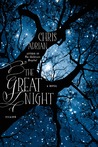
"The Great Night" by Chris Adrian: San Francisco as Faerieland

Five years ago, I got all excited when I heard that acclaimed novelist Chris Adrian was working on a book that imagined the faeries from A Midsummer Night's Dream under Buena Vista Park in contemporary San Francisco. The novel in question, The Great Night, came out in 2011, and I finally got around to reading it this month...

The Great NightThe Great Night by Chris Adrian
My rating: 4 of 5 stars

In order to love The Great Night, it probably helps to be a San Franciscan, to have pledged your heart to this hilly, foggy, colorful, magical city. It probably helps to be heartbroken, or at least trying to get over a painful loss. It helps to be the kind of person who bursts out giggling when introduced to three faerie characters named "Lyon," "Oak," and "Fell," realizing that while these are good names for faeries, they are also the names of streets near Buena Vista Park, where the story takes place. It helps to have ridden the N Judah downtown every weekday for the past six years, traveling through the tunnel under Buena Vista Park every morning and evening, and to experience this commuter-train journey with a new sense of wonder as you read about Oberon and Titania holding court in a fantastical palace under this hill. It probably helps, too, to be a theater-lover, whose first experience with Shakespeare was A Midsummer Night's Dream; to have recently written a short play yourself about dryads, oak-tree nymphs, and thus appreciate the novel's depiction of a faerie oak...

I can try to look at this novel more objectively, of course. I can recognize that it isn't perfect, though I may be close to a perfect reader for it, or have discovered it at the right time in my life. The main action takes place on Midsummer Night in 2008, but at least half of the book is taken up with flashbacks that fill in the backstories of its human and faerie characters. The three main human characters, Molly, Will, and Henry, are all about 30 years old and have suffered two major tragedies in their lives -- one during adolescence and one more recently. And the laying-out of their backstories can seem overly schematic, not to mention depressing; clearly, Chris Adrian wants to explore themes of grief and suffering and healing, but sometimes the characters seem like no more than the sum of their misfortunes. The faerie queen Titania, meanwhile, has suffered the greatest loss of all: her changeling son died of leukemia at UCSF hospital, and in her grief, she drove her husband Oberon away.

Though billed as a contemporary take on A Midsummer Night's Dream, The Great Night also seems to draw inspiration from other, later Shakespeare plays. While the rude mechanicals in Midsummer are preparing a play to entertain the king, the band of homeless theater-makers in Adrian's novel wish to "catch the conscience of the king," or rather, the Mayor, with their production of a musical version of Soylent Green. (They are convinced that the Mayor is killing homeless people and turning their bodies into the food served at homeless shelters. This is all the funnier if you pick up Adrian's clues that the mayor in question is Gavin Newsom, S.F.'s slick scion of privilege.) And the novel's focus on themes of grief and loss does not recall the lighthearted Midsummer so much as more "mature" Shakespeare plays like King Lear and The Tempest.

This is an ambitious novel, mixing realism and fantasy and humor and sorrow, shifting its point of view every few pages -- and I can acknowledge that it doesn't always work. But mostly, I'm just so happy to see my San Francisco, the 21st-century Mission and Haight and Sunset, captured in fiction so well and so lovingly. (I love Tales of the City, but it mostly takes place in Russian Hill and Pac Heights, neighborhoods where my friends and I rarely have cause to venture.) Descriptions of the faeries sprucing up a sterile hospital room, or Titania's bad blind date with a Marina bro, feel funny and painful and, in spite of everything, true. Because this feels like the kind of city where such things can happen.


View all my reviews

Tuesday, November 4, 2014

Everything's Coming Up Rosie: Overthinking My Halloween Costume

For Halloween this year, I dressed up as Rosie the Riveter. So did a lot of other young women in San Francisco. There were two other Rosies at the Halloween party I attended on the Potrero Hill edge of the Mission; two other Rosies on the subway platform as I was coming home from work. (This embarrassed me so much that I quickly scooted down the platform so we wouldn't all wind up in the same subway car.) I was filled with a mix of pride at having successfully embodied the Zeitgeist and shame at realizing I was less clever and distinctive than I thought I was. And, naturally, I began to over-think the larger sociological forces that might have led to this spate of Rosies in San Francisco this Halloween. My conclusions:
  • Ease of putting the costume together. The day before Halloween, I wasn't even sure that I would dress up -- and then I realized that I had all of the components of the "Rosie" costume already in my closet.
  • Applicability to women of all ages, races, and sizes. Unlike many costumes, you don't have to have a certain body type or hair color to be recognizable as Rosie the Riveter -- all you need is the red bandana and blue work shirt.
  • It's an explicitly feminist costume that enables you to demonstrate how you're not into the whole "Halloween as an excuse to wear lingerie in public" thing, but it still allows you to look attractive -- wear red lipstick, show off your muscle.
  • Millennial-generation nostalgia for the "Greatest Generation" 1940s. Think about it: we fetishize handicrafts and the artisanal; we name our Etsy stores after our grandparents; we put up "Keep Calm and Carry On" posters. I also saw a lot of A League of Their Own "Rockford Peaches" this Halloween -- a costume that occupies a comparable place in our cultural iconography to Rosie the Riveter.
  • Amy Poehler's character on Parks and Recreation dressed up as Rosie the Riveter in 2012. I don't watch Parks and Rec, but you can't underestimate the influence of pop culture.
I also thought about how, when I moved to San Francisco six years ago, it seemed like every young woman dressed up like Frida Kahlo for Halloween, but I didn't see any Fridas this year. Could there also be a cultural significance in the shift from Frida to Rosie over these six years?
  • Dressing up as Frida Kahlo does require you to possess certain physical characteristics: you've pretty much got to have long, dark hair. And, if you are brunette but not Hispanic, you may also worry that dressing up as this iconic Mexican artist constitutes cultural appropriation. At least when you live in a city that is so consumed with debates over gentrification.
  • There was a big Frida Kahlo exhibit at SFMOMA in 2008, which might have contributed to all of the Fridas I saw that Halloween.
  • Frida and Rosie are both feminist icons, but they represent two different kinds of feminism. Kahlo's art often depicts the female experience as one of pain and suffering. (My most-read post of all time is called "Must a Female Artist Suffer?", written in response to the 2008 Kahlo exhibition.) Rosie the Riveter is about rolling up your sleeves and getting shit done. Which seems in tune with the forcefulness that feminism has attained in the last half-decade.
  • Six years ago, fashion was much more in tune with Frida's boho style than with Rosie's utilitarian workwear. But now, the tide has shifted. Clothes have gotten more minimalist, more tomboy. Call it a shift from Anthropologie to J. Crew. I didn't own a "Rosie the Riveter" blue button-down six years ago, but now it's one of my favorite shirts.
Mostly, though, I'm amazed at how a pop-culture character, intended to boost home-front morale in a war that happened 70 years ago, can resurface in 2014 and embody current cultural trends. This autumn has been marked by intense, Internet-fueled anxiety over various aspects of feminism and an even more fraught anxiety over the sociological category of the "basic bitch." If feminism (a radical ideology) is the thesis and basic-bitchness (the unthinking acceptance of feminine tropes) is the antithesis, a Rosie the Riveter Halloween costume is the synthesis. She's the feminist icon that everyone can embrace. A basic costume for basic, feminist girls like me.

Photo of me as Rosie at my office Halloween party taken by my colleague, Abdul Bassa.

Monday, August 19, 2013

The Obscure Sorrow of Turning 26

"I'm thirty," I said. "I'm five years too old to lie to myself and call it honor."
—Nick Carraway in The Great Gatsby
I turned 26 last month. This, I'd thought, was not a particularly remarkable birthday to celebrate—turning 25, a quarter century, is what gets all of the hoopla. Yet in recent weeks, I've seen several references to the idea that one's twenty-sixth birthday marks the end of foolish youthful hedonism.

There's this humor piece on The Hairpin, "Thank You So Much For Being With Me to Celebrate My Twenty-Five-and-Twelve-Month Birthday," by Julia Meltzer:
As a twenty-five-and-twelve-month-old, it is completely appropriate that I spend Saturday nights locked in my apartment with the five of you and two boxes of Franzia playing Settlers of Catan, Drinking Rules Edition. Max and Joe, I still think that longest road trade was sketchy! No but seriously, when I turn twenty-six that will all be over. I will start going to casual dinners at sophisticated restaurants with friends I haven’t seen in soooooo long, having One or Two Cocktails, and heading home to watch an independent film with my serious boyfriend before knocking off a quick journal entry and falling asleep in a haze of contentment. 
(As many 26-year-olds do, I alternate between the "watching indie films with my serious boyfriend" phase of my life and the "drunken Settlers of Catan" phase. Nonetheless, I relate to what Meltzer is saying about the gap between our real lives and our ideal lives. It's one of my favorite subjects.)

Then there's this, from The Dictionary of Obscure Sorrows:
Midsummer, n. A feast celebrated on the day of your 26th birthday, which marks the point at which your youth finally expires as a valid excuse—when you must begin harvesting your crops, even if they’ve barely taken root—and the point at which the days will begin to feel shorter as they pass, until even the pollen in the air reminds you of the coming snow.
(Are you familiar with The Dictionary of Obscure Sorrows? I only just discovered it, but it is the best. It puts words to all the secret aches and regrets and doubts that characterize life as a sensitive soul in the 21st century, yet so often go unacknowledged. The kinds of delicate, poignant, but universal emotions that I want to write plays about.)

Maybe this is just confirmation bias, turning 26 and then suddenly becoming more aware of/interested in other writers who talk about this.

Or maybe it's that I was born into a huge cohort of Internet-equipped, navel-gazing youths, all full of So Many Feelings, all convinced that we're the first people ever to feel this way, and compelled to share our uneasy angst with the world. We're attending our five-year college reunions, and listening to the new Vampire Weekend album, and watching things like Frances Ha and Girls that speak to the anxieties of our generation; and we link to Buzzfeed articles about "growing up in the '90s" and wallow in nostalgia for a childhood that suddenly feels so far away; and I'm amazed that we don't all melt into one quivering blob of jelly, overwhelmed by the weight of all these obscure sorrows.

(Nota bene: I originally typed "quivering blog of jelly." A Freudian slip.)

And when the more practical voice in your head speaks up to tell you that nostalgia is a foolish waste of time, that your life is actually going pretty well, that you have no reason to castigate yourself for being an "irresponsible youth" because you're a type-A perfectionist who's had maybe two hours of true irresponsibility in your entire life... well, it can be tempting to wish that that voice would just shut up, even though it speaks the truth. Angst and nostalgia are so seductive, and it seems like it'd be so beautiful to stand with everyone else, in confusion and misery, and feel All the Feelings.

As a matter of fact, today is my five-year anniversary of moving to San Francisco. I love it here, and I also realize that during these five years I have matured, ridding myself of many of the self-delusions and false beliefs that held me back, and generally becoming a much happier, better-adjusted person. I'm more outgoing and confident; I have a better understanding of others' motivations, as well as my own. In many respects, I feel like I lead a charmed life (for which I try to cultivate gratitude). This anniversary should be cause for a (responsible) celebration! Yet my joy is tempered with a sense of "Okay, Marissa, you've had five years as an aimless flâneur; now it's time to get down to business, figure out what you want out of life, purge yourself of everything extraneous, and for God's sake, start saving for retirement! You are going to need to push yourself a lot more in the next five years in order to accomplish everything you want to do in your twenties."

In the first blog post I ever wrote after moving here, I quoted Angels in America: "Heaven is a city Much Like San Francisco."

And now, five years on, I'm saying to myself, "The Great Work begins."

And here's another question: now that I am 26, am I too old to refer to myself as a girl? My blog header calls me "a girl with an answer for some things and a question for most things," and in my Twitter bio I'm a "would-be girl-about-town," but at what point does that word start to become ridiculous when applied to a grown, adult woman?

Wednesday, June 5, 2013

East Coast Girl (at least for a week)

Tomorrow, I'm traveling to New York for a week to attend my 5-year Vassar reunion (where did the time go?!), catch up with East Coast friends, see some Off-Broadway theater, avoid getting attacked by cicadas... you know, the usual.

There'll probably be no new posts while I'm away (well, except for a link to my new Theater Pub column when it's up). But I do hope to have some fun adventures, and to share them here once I've returned home!

Song for the moment, a.k.a. New Favorite Song: "East Coast Girl" by Cayucas.


When I first heard this song on the radio, a couple of months ago, I liked it a lot, but I also thought "This band sounds like they are trying to out-Vampire-Weekend Vampire Weekend." Turns out I'm not the only person who thinks that: the good people of Pitchfork have come to the same conclusion regarding Cayucas' musical style. Unlike the snooty Pitchforkers, though, I'm not so bothered by the way that Cayucas sounds like a breezier, less substantial version of one of my favorite bands. Music need not be epic or groundbreaking to have value, and it's hard to hate such summery, charming indie-pop.

I bought Cayucas' album, Bigfoot, the week it came out, and listened to it while I was on my way to a hipster barbecue in the Mission District. The sun was shining. I was wearing cut-off jean shorts. I rode the J-Church train past Dolores Park and saw San Francisco's golden youth spread before me, day-drinking and sunbathing on the grass -- full of beauty and promise and entitlement and absurdity. And with Bigfoot playing in my ears, it was a perfect moment.

This isn't to denigrate "darker" or more ambitious music -- in fact, I love the way that Vampire Weekend's new album, Modern Vampires of the City, deals with twentysomething angst and despair and "the nagging pressure to make the most of their finite youth." Goodness knows, I've been feeling a lot of that lately, as the realization "Marissa, you graduated college five years ago" sinks in, deeper and deeper. But sometimes you need an antidote to such negativity: lilting music that speaks of summer fun, a weekend reconnecting with old friends and celebrating the good things that have happened in the last five years.

That's what I hope Reunion will be like, at least.

Tuesday, February 12, 2013

"The Chapter In Your Life Entitled San Francisco" - there's more to the story!

On Saturday night, I was at a small party hosted by a friend of a friend, in an apartment north of the Panhandle. A framed book cover, hanging on one of the kitchen walls, caught my attention, and I went over to investigate it.

The cover was plain but elegant: light blue, with a cream-colored rectangle containing the book's title, written in a fine italic script: The Chapter In Your Life Entitled San Francisco.


All at once, I started freaking out. The good kind of freaking out, that is. Because, last spring, I fell head-over-heels for a song called "The Chapter In Your Life Entitled San Francisco," by the Lucksmiths, a band from Melbourne. For a long time last year, they were my new favorite band and "The Chapter In Your Life" was my new favorite song. I couldn't believe I'd never heard it before. I wanted to tell everyone I knew (particularly all of my San Francisco friends) to drop everything and listen to it ASAP. In short, I am probably one of the few people in the United States who is an evangelist for this song, so it felt like some kind of gorgeous serendipity to stumble upon that framed book cover in that apartment kitchen.

The owners of the apartment had no idea that there was a song called "The Chapter In Your Life Entitled San Francisco," so I made them find it and watch it on YouTube as I sang the excellent lyrics under my breath. "Are you ever coming clean? / Or will I never know the meaning of the lines you scribbled out / So that I couldn't read between?" Brilliant stuff.

They also took down the picture frame and opened it up, to show me the Chapter In Your Life Entitled San Francisco book. It's a slim guide to the city and its sights, dating from the late 1940s. You can get a copy on Amazon. I didn't get to look at it for very long, but it's probably fascinating — I love vintage travel guides! The woman who lives in the apartment told me that some New York friends had given the book to her when she moved to San Francisco.

Knowing that the Lucksmiths stole the title of their song from an old book doesn't diminish my appreciation of their music. In fact, I enjoy learning where artists get their ideas. And because you really can't ever have too much Lucksmiths, here's the video again:

Monday, December 31, 2012

"The N I Love" (With Apologies to the Gershwins)

This is what happens when you let me out of work two hours early on New Year's Eve, and I get bored on the subway platform, and think about how much time I've spent waiting for the N-Judah in the four years I have lived in my apartment:
Some days it comes along
The N I love
It's made of steel so strong
The N I love
And when it comes my way
It's only after long delay 
It runs for seven miles
From Bay to sand
And it takes quite a while
To cross this land
I know it seems absurd
But MUNI's as slow as you've heard 
And it's even slower Sunday
Then on Monday
It breaks down
Yeah, they're sure to fix it one day
But on Wednesday?
That's an "it depends" day 
But still, it takes me home
And downtown too
From east to west I roam
It pulls me through
And so all else above
I'm waiting for the N I love.

Thursday, September 6, 2012

J'adore the Flore (Theater Pub column)

If you want to see me pay tribute to the Cafe Flore, admit to my latest beverage addiction, and make grandiose comparisons between my writing habits and those of Tony Kushner and Stephin Merritt, check out "J'adore the Flore," my latest column at the SF Theater Pub blog.

(One must also note that I named my column after a Stephen Sondheim song and I watched a Judy Garland documentary on TV tonight. I swear, my soul is that of a middle-aged gay man.)

Sunday, July 22, 2012

"Beer Theory" in SF Theater Pub's Pint-Sized Plays Festival

I'm back! Miss me? I have had an incredibly busy month or so: family reunion, Europe trip, several birthday celebrations (including my own), friends and family coming to visit, and, last week, the opening of my latest play! This is "Beer Theory," a 10-minute play included in San Francisco Theater Pub's Pint-Sized Plays Festival.


I love Theater Pub and their annual Pint-Sized Festival -- they produced my play "Drinking for Two" in 2010, my first production in San Francisco. This year, Pint-Sized is bigger and better than ever: ten plays, six performances, live piano music, a dancing bear, a talking beer, corporate sponsorship from Good Vibrations, and a reappearance of the audience-favorite Llama character. Last week the show even went on tour to the Plough and the Stars on Clement Street -- I am thrilled that we got some theater west of Van Ness Avenue and also thrilled that, at six performances, this is the longest run any play of mine has ever had.

As for "Beer Theory," I can think of no better way to describe it than the tag line that producer Julia Heitner devised: "Boy Meets Girl. Apollonian Meets Dionysian." It's a meet-cute play with a twist, and, more than any play I've written, it gets at what it's like to be inside my head. It's inspired by A Visit from the Goon Squad and the Magnetic Fields concert and Sexual Personae and my own neurotic/over-thinking tendencies and a lot of other stuff besides. It's also my attempt to get over my fear of writing direct-address monologues!

"Beer Theory" has been sensitively directed by Katja Rivera and stars Rachel Ferensowicz (who once again proves that she is one of the most charming actresses in San Francisco) and Geoff Nolan (who plays one kind of romantic lead in my play and a very different one in "Circling," another of the Pint-Sized offerings).

Pint-Sized has received a lot of great publicity. Theater Pub did email interviews with me and with Katja. Lily Janiak profiled the festival in SF Weekly and gave us a nice review on her blog. Megan Cohen blogged about the audience reaction to her dancing-bear play, and that play made a new fan out of Rachel Bublitz. And we got some very mysterious and unexpected publicity from SF Daily Secret!

In short: you should come to one of the three remaining performances! Our brief foray into the Inner Richmond is over, but we'll be at Cafe Royale in the Tendernob on July 23, 30 and 31. Don't miss it!

Photo: Actors Rachel Ferensowicz and Geoff Nolan (with an innocent bystander in the middle) in "Beer Theory."

Monday, June 4, 2012

"Tenderloin" at Cutting Ball: Voices of a Neighborhood


The week that Tenderloin opened at Cutting Ball Theater, I published a column for San Francisco Theater Pub that could be seen as disparaging the Tenderloin neighborhood. (It was mostly about how having so many S.F. theaters in the Tenderloin puts our artform at a disadvantage, since it's hard to entice people to visit the neighborhood and it doesn't get good foot traffic.) The timing of my article vis-a-vis the opening of Tenderloin was purely coincidental and I hope that no one made the mistake of interpreting my piece as a veiled swipe at Cutting Ball. Nonetheless, you could say that I seemed to set myself up in opposition to their play. My article took the conventional bourgeois attitude toward the Tenderloin; Cutting Ball's play is designed to counteract this.

Tenderloin has been over a year in the making. Led by director and documentary-theater specialist Annie Elias, the six actors in the piece interviewed Tenderloin residents and other people with a connection to the neighborhood, then shaped the interviews into a theater piece. In the tradition of other documentary-theater artists such as Anna Deavere Smith, they worked to reproduce the exact phrasing, cadences, vocal tone and overall affect of the interviewees.

The result is absolutely stunning from a performance standpoint. MVPs include Tristan Cunningham, who portrays a sad-eyed homeless beatboxer, an irrepressibly cheerful Filipina motivational speaker, and a cynical street-cleaner; and Rebecca Frank, an actress in her mid-twenties who somehow manages to transform herself into 86-year-old Leroy Looper, the "Mayor of the Tenderloin." Meanwhile, David Sinaiko, a middle-aged man with gray hair, plays Leroy's doting wife Kathy. Michael Uy Kelly plays a transsexual waitress, a retired police officer, and a Tenderloin resident with a hilarious story about being asked to take care of a baby. Siobhan Marie Doherty excels at playing tenderhearted female characters (a young woman in an abusive relationship; a massage therapist who provides services to Tenderloin residents) while Leigh Shaw plays more authoritative or powerful women (an activist lawyer; a pastor at Glide Church).

I also found the piece interesting from a playwriting perspective. After all, none of it was conventionally written, but it was wrought out of dozens of interviews -- the speakers are often juxtaposed in interesting ways so that they seem to be in dialogue with one another. I found the structure of the piece effective overall. Moreover, these people speak in fascinating, idiosyncratic ways, which I see as encouragement to be bolder in my own writing. There are times when I'll write a line and then strike it out, saying, "No one would ever say that in real life -- it's too weird/too flowery/too nakedly emotional/etc."  But, it turns out that when you interview real-life people, they do say weird, flowery, emotional, expressive things. And of course, this heightened language works great on stage.

As for the political and thematic messages of Tenderloin? Clearly, the piece is designed to display often-overlooked aspects of the neighborhood -- the architectural heritage, the children who are growing up there (little kids on bouncy-balls and a bubbly high-school student both appear in the play), the many acts of kindness and compassion that take place on a daily basis. The piece also comes out against city policies that have turned the Tenderloin into a "containment zone" for the poor and downtrodden and the social services that cater to them. It used to be that halfway houses and soup kitchens were scattered around the city, but starting in the '70s, they became concentrated in the Tenderloin, amplifying the neighborhood's problems. I found this point especially striking and persuasive because it parallels what I said in my Theater Pub column. I believe San Francisco would benefit if its theaters were located in neighborhoods across the city, rather than just in the Tenderloin; and I can now see how the city would benefit if there were soup kitchens or drug-rehab clinics outside of the Tenderloin, too. Moreover, if the Tenderloin has become synonymous with "everything people don't want," and the majority of San Francisco theaters are located in the Tenderloin -- does this also mean that theater is something that "people don't want," that they'd rather not have in their neighborhood? Something to think about.

Yet at the same time, I felt like Tenderloin sometimes went a bit too far in trying to make us love the neighborhood. We hear from a young woman from Palo Alto who feels safe and welcome in the Tenderloin... but we don't hear from any women complaining about getting catcalled or stared at, which has frequently been my experience. (OK, the catcalling is usually mild, along the lines of "Hey beautiful, give me a smile" rather than anything disgustingly sexual. Nor have I ever had the sense I would be physically assaulted. Nonetheless, it's not exactly fun to walk past a dozen guys loitering on the sidewalk and staring at you.) I wish that that perspective had been represented somewhere in the patchwork of stories that make up Tenderloin.

At the beginning and end of the show, the actors portray what we might think of as "typical" Tenderloin denizens -- drunks, prostitutes, the homeless and mentally ill. In the final scene of the performance that I attended, actress Rebecca Frank (whom I know somewhat) was playing one of these characters. She spotted me in the audience, caught my eye, made some comment about how tall I am, came up the aisle, and asked me to give her a hug. I complied, but at the same time, I was all too well aware that I was hugging Rebecca, a nice young woman pretending to be a homeless drunk, rather than an actual homeless drunk. Which, I think, says something about the limitations of theater. Tenderloin certainly taught me a lot, introducing me to some fascinating real-life people as channeled through the skillful performances of six talented actors. Perhaps I empathize a bit more with the Tenderloin now. But I'm not going to embrace any homeless drunkards any time soon.

Tenderloin has been playing to sellout crowds and was just extended for 2 more weeks, June 14-24. Tickets here.

Image: Rebecca Frank and David Sinaiko as Leroy and Kathy Looper. Photo by Rob Melrose.

Thursday, April 5, 2012

New Favorite Song: "The Chapter In Your Life Entitled San Francisco" by the Lucksmiths

"Is it April yet?

A valid question (to which the answer is "yes") -- but I'm not asking you that. Rather, I felt like quoting the opening line of "The Chapter in Your Life Entitled San Francisco" by the Lucksmiths -- my new favorite song about my favorite city.


Why have I lived in San Francisco for nearly 4 years and never heard this song (it came out in 2005)? Why doesn't everyone I know consider this their theme song? Why did it not become a massive smash hit? Ah! It's so good! Intelligent lyrics! Sunny melody! Cute Aussie boys with cute Aussie accents!

I love how the Australian perspective informs the lyrics, too -- it's a song about loving someone who's in a different hemisphere, with different seasons and "unfamiliar stars." A friend of mine who's been to Australia says that that's the most disorienting thing -- to step outside and literally not recognize the constellations.

If I had a cabaret act I would perform this song in a medley with the Magnetic Fields' similarly-themed "Come Back From San Francisco," naturellement.

I actually learned of the Lucksmiths yesterday when reading Alec Nevala-Lee's blog post about the Magnetic Fields, to which a very enthusiastic commenter named Darren Goossens had responded with a lengthy comment implying that if you love the Magnetic Fields, you'll also like "the great Australian wordy-pop band, the Lucksmiths." (It seems that Mr. Goossens merely moonlights as a pop-music enthusiast and in his day-to-day life, he is a nuclear scientist. Curiouser and curiouser!) The quoted lyrics greatly appealed to me, so I investigated the Lucksmiths further. They put out several acclaimed albums in the '90s and '00s but disbanded in 2009.

"The Chapter In Your Life Entitled San Francisco" comes from the Lucksmiths' 2005 album Warmer Corners, which I listened to today and warmly recommend to all lovers of well-crafted guitar pop. Other standout tracks: "A Hiccup in Your Happiness," "The Music Next Door," "Sunlight in a Jar," and "Fiction." After hearing this last song, which is about a girl with the word "fiction" tattooed on her arm in typewriter font, I now have my answer to that recent AV Club Q&A about mandatory pop-culture tattoos...

Wednesday, February 29, 2012

Leap Day Headlines

I was astounded to see a theater making above-the-fold, headline news this morning!  Full article here.

Additional links for the day:

Fun story about a French leap-year tradition: a newspaper that only publishes on February 29

My own leap-year post from 4 years ago, recounting a leap year that happened 8 years before that -- still the most memorable one I've had.

Saturday, December 3, 2011

One-Minute Plays for the Holidays

Can you believe it's December already?  Three weeks to Christmas... and two weeks to the San Francisco One-Minute Plays Festival!

I will have two plays in the festival (to be directed by Evren Odcikin and Christine Young), and several of my playwright friends are also participating, including Tim Bauer, Megan Cohen, Bennett Fisher, Marisela TreviƱo Orta and Ignacio Zulueta.

I love the mix of writers that are involved this year and it is an honor to be in the same festival as some much better-known Bay Area playwrights like Eugenie Chan and Philip Kan Gotanda.

Saturday December 17 at 8 PM and Sunday December 18 at 2 PM and 7 PM, at the Thick House on Potrero Hill.  Tickets here. As Ignacio pointed out, it's a 99-seat house and only 3 performances, so get your tickets now!

That's really all the information you need -- I can't tell you what my plays are about, because it's really easy to spoil a one-minute play!

Also check out the One-Minute Play Blog.

Tuesday, October 11, 2011

Olympians are Omnipresent!


The San Francisco Olympians Festival is well under way and it feels like it has been taking the city by storm! You can check us out at the following locations...
  • On your iPhone: Thanks to playwright/programmer Kirk Shimano, we are the world's only mythology-inspired theater festival with its own (free) app! It features schedules, cast lists, and festival artwork. Search for "olympians" at the App Store.
  • In Bay Stages: There's a 1-page feature on us in the October issue of this new-ish local performing arts magazine. Also free! Pick up your copy here.
  • In American Theatre Magazine: We made it into a national publication! The article isn't available online, but pick up a hard copy of the October issue and turn to pages 14-15 for a few nice paragraphs on the Olympians Festival.
  • At the Cafe Royale (800 Post Street): We had our opening party here, and all month long the cafe gallery is hosting a show of the original Festival artwork. It is just stunning to see in person, particularly Molly Benson's Perseus glass mosaics and Emily C. Martin's original Pleiades drawing, featuring real gold leaf!
Photo by Claire Rice. That's me kneeling at front, with some of my fellow Olympians playwrights: (l-r) Maria Leigh, Christian Simonsen, Neil Higgins, Bryce Duzan.

Sunday, September 25, 2011

Possible preview of my day tomorrow


I'm taking a vacation day tomorrow, with starry-eyed visions of working on my play and not having to fight for a seat at the coffee shop. But this funny video, from local sketch comedy troupe Killing My Lobster, tells me I oughtn't get my hopes up.

Seriously, when you work a traditional 9 to 5 job in San Francisco, you can feel like an anomaly, and, instead of feeling lucky to have a "real" job, you can feel like you went wrong somewhere. (Because everyone else in the city seems to have so much lovely free time to hang around the Mission and drink coffee!) My co-workers think of me as the weird artsy one who does theater after work, and my theater friends think of me as the weird corporate one who spends all day in an office. On a good day, I feel like a superhero with a secret identity. On a bad day, I feel like I have no identity at all.

But tomorrow, I get to live in my superhero playwright identity for the whole day, so, crowded coffee shops or no, I think it'll be a good day.

Sunday, September 4, 2011

The final reel at the Red Vic Movie House

Vivre sa vie
Sita Sings the Blues
Let the Right One In
Inglourious Basterds
The City of Lost Children
The Fall
Small Change
Tiny Furniture
Vertigo
Harold and Maude

It looks paltry when I just write down the titles, but I believe that that's the complete list of all the movies I saw at the Red Vic Movie House, from the time I moved to the Inner Sunset in January 2009 until the cinema (sadly) closed at the end of July. Consider this a belated obituary.

I feel like there were dozens more movies that I could have or should have seen there (and then maybe, my magical thinking goes, the cinema wouldn't have closed), but this list represents some amazing movies and some indelible memories. I remember seeing Vivre sa vie on a lonely winter Saturday when I was still quite new to San Francisco and finding my way. The heroine is an elusive, mysterious character, and not a role model -- except that I could relate to how she finds solace or catharsis by sitting in a cinema and watching movies. After all, that was what I was doing myself.

Looking at the list I am struck by how many of the movies I saw at the Red Vic have to do with cinephilia or at least have scenes set in movie theaters. Vivre sa vie: the unforgettable scene of Anna Karina watching The Passion of Joan of Arc. Inglourious Basterds: a cinephile's fever dream, with an elaborate climax taking place inside of a movie theater. The Fall: another cinephilic fever dream, a movie that became a cult classic at the Red Vic, its breathtaking images demanding to be seen on the big screen. Small Change: the movie theater provides the backdrop for many of the children's everyday adventures. Inglourious Basterds and The Fall also have strong messages about the power of cinema for good or for ill, how stories capture our imagination and can hurt us or heal us. As does the backstory of Sita Sings the Blues, an animated film made by a woman struggling to get over a bad breakup, transforming her pain into cinematic art.

Holidays were another running theme of my Red Vic moviegoing experience. Let the Right One In as a just-before-Halloween scary treat. The Fall on New Year's Day 2010, the cinema filled with lonely souls. My birthday this year, celebrated with classic cocktails at the Alembic followed by a screening of Vertigo at the Red Vic -- my "HitchCocktail Party." The next day, the Bay Guardian interviewed one of the Red Vic's owners about the cinema's upcoming closure. She said "It's been a long, slow, steady decline. Then again, I worked last night and it was pretty busy for Vertigo." Can I and my party take credit for that?

I wasn't too impressed by The City of Lost Children (amazing set design and visual sense, but I found the story lacking), and Small Change is fairly minor Truffaut, but other than that, I will gladly recommend all of the above movies. And just look at the range of movies that the Red Vic showed! While many of its screenings were of recent-ish indie-ish films, it always made time for the classics. How could I not love a movie theater where I first experienced both a French New Wave classic and a film (Tiny Furniture) made by a young woman who graduated from college the same year I did?

I was there on the final weekend to see Harold and Maude, the cultiest of the Red Vic's cult classics, and I miss the Red Vic Movie House already. So, with Anna Karina, let's shed a tear for what we witnessed on the silver screen:

and with Harold and Maude, watch the sun go down on this piece of San Francisco history.

Saturday, July 9, 2011

"Tales of the City: A New Musical" - San Francisco in Song

Shortly after moving to San Francisco in 2008, I read Armistead Maupin's first Tales of the City book and then learned that it was being adapted into a musical -- which I thought was a great idea. So I was very excited to see the world premiere, at the American Conservatory Theater (ACT) here in town through the end of the month.

Adapted from Armistead Maupin's columns and novels, the musical has a libretto by Jeff Whitty and a score by Jake Shears and John Garden, of the 1970s-influenced band Scissor Sisters. (After writing this and Avenue Q, Whitty has cornered the market on musicals about young urbanites exploring their identities while living in a crazy apartment house presided over by a gender-ambiguous proprietor.) Shears and Garden draw on a mix of musical styles for the score, not limiting themselves to Scissor Sisters' glam-rock/disco sound. In an interview in the playbill, they make the point that the 1970s were a diverse era in music and that '70s Broadway composers (Sondheim, Stephen Schwartz, John Kander) wrote music influenced by pop, rock, folk, jazz, traditional Broadway, etc. Thus, the score includes such items as a thumping disco number for the famous scene where Michael "Mouse" Tolliver participates in a jockey shorts dance contest, Janis Joplin-style blues-rock for Mona Ramsey's songs, and an outrageously campy Broadway-gospel song called "Homosexual Convalescent Center." Lyrics are more functional than brilliant, though I liked the rhyme of "marijuana / co-ed sauna" in a song where Mary Ann Singleton's friends enumerate the good things about San Francisco.

The Tales of the City characters are so beloved that it must be intimidating for actors to portray them, but this new musical is perfectly cast in its central roles. Betsy Wolfe is a sunny Mary Ann and her clear, pure voice suits her character's innocence. Wesley Taylor is an adorable Mouse, making his character's romantic woes instantly sympathetic. Judy Kaye is warm and dignified as Mrs. Anna Madrigal. At first, for all her kindness, she seems somehow distant from the other characters, but when Mrs. Madrigal's big secret is revealed at the end of Act 1, everything makes sense. Mary Birdsong captures Mona Ramsey's cynical, self-destructive side and delivers the funniest lines in the show.

The smaller roles sometimes suffer for not giving the performers enough to do or otherwise being underwritten. The character of DeDe Halcyon-Day gets two broadly comic songs and Kathleen Elizabeth Monteleone plays them to the hilt, but she functions more as comic relief than as an integral part of the show. DeDe's husband Beauchamp (Andrew Samonsky) duly performs his plot function of seducing Mary Ann, then basically disappears from the show. A brief scene in Act II shows Jon Fielding (Josh Breckinridge) and Beauchamp hooking up at a gay bathhouse, but this should probably be cut because it raises more questions than it answers. One of the key features of the Tales of the City stories is their blend of high-society characters with marginalized, outsider characters. But the musical often seems to wish that the upper-crust characters didn't exist, in order to go back to having more fun with those crazy and wild folks on Barbary Lane.

Indeed, that's the pitfall of adapting Tales of the City into a musical. Yes, the '70s atmosphere is fun, yes, the characters are lovable and relatable, yes, the big events of the plot give them something to sing about. But there's just too much plot and the creators still haven't found the best way to shape and balance it.

For instance, most of the reviews have mentioned as an emotional high point Mouse's "Dear Mama," where he sings his coming-out letter in the form of a simple folk ballad, unrhymed and all the more affecting because of it. I could hear grown men in the audience crying during this song. But the trouble, from a storytelling perspective, is that we never find out Mouse's mother's reaction to the letter. Does she accept her gay son, or spurn him? It's a good song, but a weak choice to have Mouse sing it to Mary Ann and Mrs. Madrigal (he wants them to hear the letter before he sends it). Much better for him to sing it as a soliloquy, or else directly to his mom.

Then there's the question of whose story this really is: Mary Ann's, Mouse's, or Mrs. Madrigal's? The musical starts off seeming like it will be Mary Ann's story (the "wide-eyed girl in the big city" opening number that I predicted back in 2008) but by Act II, the other characters' stories have become more compelling. The different storylines also present conflicting messages. Mouse and Mrs. Madrigal gain the courage to stop hiding who they really are; they tell the truth and are rewarded for it. Meanwhile, Mary Ann learns that she needs to hide who she is, to tone down her innate good cheer and stop being so trusting. In most of Tales of the City, San Francisco is portrayed as a hippie paradise of love and acceptance, but in Mary Ann's story, it's full of horrible people who try to take advantage of her. Does this make the musical intriguingly complex -- or thematically muddled?

A friend of mine says that she thinks the treatment of Mary Ann, vis-a-vis Mouse, is unfair. By the end of the musical, Mouse has acquired a handsome, successful, loving boyfriend, while Mary Ann has had relationships with two complete scumbags. I can see my friend's point -- as a straight woman, I too identify with Mary Ann and want her to be happy. However, I also appreciate seeing an ingenue heroine whose character arc is not "move to the big city and find Mr. Right." In San Francisco, Mary Ann learns to stand up for herself and acquires wonderful new friends, but she also becomes increasingly hardened and cynical. In her eleven-o-clock number, "Paper Faces," she laments how we all put on masks and personae in order to survive. "Paper Faces" also makes use of one of my favorite musical-theater tricks: the chorus joins in, the orchestra drops out, and everyone keeps singing in soaring harmonies. It gets me every time.

I talked about the characters' arcs, and while that's a good thing to have in a conventional play or musical, maybe that's wrong for Tales of the City -- which after all is based on a loose, rambling, episodic narrative, the first serialized story in a daily newspaper since the 19th century. Though Tales of the City sounded like a slam-bang idea for a musical, it really did take a lot of work to squeeze it into a conventional musical-comedy shape, with character arcs, a happy ending, and a 3-hour running time. To their credit, the creators have obviously worked hard, and not just coasted on the nostalgia that some San Franciscans feel for this era and these characters. (Even though Tales of the City is not a great musical, it could be far worse than it is and still make money in this town, due to the nostalgia factor.) But just as Mary Ann Singleton learns that a 5-day vacation in San Francisco cannot compare with actually living here, a 3-hour musical of Tales of the City, by definition, cannot really be Tales of the City.

Photos by Kevin Berne. Top: Judy Kaye as Anna Madrigal and Mary Birdsong as Mona Ramsey. Bottom: Patrick Lane as Brian Hawkins, Betsy Wolfe as Mary Ann Singleton, Wesley Taylor as Michael "Mouse" Tolliver and Josh Breckinridge as Jon Fielding.

Thursday, June 9, 2011

Those Hedonistic "Edenites": Stuart Bousel's New Play at the Exit Theatre

There's a stereotype that most plays by young (and even not-so-young) writers will be autobiographical in nature, attempts to transform their own life experiences into theater and maybe get revenge on a few ex-lovers while they're at it. But, in my experience, that hasn't really been the case. My playwright friends are writing about the Greek financial crisis or zombies invading small-town Texas -- not about everyday life in San Francisco at the beginning of the 2010s. And I can't remember the last time I saw a play that made no bones about being autobiographical. Thus, there is something oddly refreshing about my friend Stuart Bousel's Edenites: A Play About San Francisco, described in its self-mocking press release as "a stylish piece of theatrical fluff, pretty much an exercise in drama as therapy, in which actual experiences are being thrown up on stage by the writer in a flagrant attempt to make sense of his own life." Edenites is honest about the way we live now (e.g. it admits that many 30-somethings still live with roommates), without trying too hard to be trendy or hip (no name-dropping and just the right amount of San Francisco in-jokes). You may find that the play invites you to make sense of your own life too.

Edenites is an ensemble comedy-drama about a group of people in their mid-30s, centered around Hugo (Kai Morrison), a San Francisco gay man in an open relationship. Normally, Hugo is content to live off his trust fund, date the pop-culture buff Xavier (Brian Martin) and have flings with other men, such as the seductive Aurillio (John Caldon). But during the week Edenites takes place, two things happen to shake Hugo out of his aimlessness and complacency. First, his old friend Chester (Ryan Hebert) comes from Tucson for a visit. Then, for the first time, Hugo sleeps with a woman -- the outspoken bisexual Lisa (Kristin Broadbear).

Hugo's other friends aren't much more successful at personal relationships. Chester is still hung up on his ex-girlfriend Imogen (Xanadu Bruggers), a successful novelist who happens to be in San Francisco on a book tour. The married couple Trent and Jenny (Ben Kruer and Megan Briggs) are stressed out with a new baby in the house. Rounding out the cast are Kira Shaw as Hugo's hipster roommate and Chris Struett as a queeny bookstore owner.

I mention all of the actors by name because one of the strengths of Edenites is its cast, largely made up of what we might call the Stuart Bousel Stock Company. (Three of the actors were in Stuart's recent production of M. Butterfly at Custom Made, and others of them have also been in Bouselian projects.) I was struck by how well they all lived in their characters' skins, not only acting as they spoke their own lines, but reacting to their fellow performers and Stuart's funny and bittersweet scenarios. Perhaps it helps that some of the actors, notably Brian Martin, are modeling their characters after real people whom we and Stuart know.

And a strong cast is key to the success of Edenites, because the play is all about exploring the depths of its characters -- showing how they surprise one another and even surprise themselves. Imogen may be successful and stylish (as played by the redheaded Bruggers in white blouse and pencil skirt, she looks like a 21st-century Joan Holloway), but her story proves that "it's a comfort to know that even famous people don't have their shit together" -- one of the lines that really resonated with me. Lisa may at first seem like a spoiled, sex-crazed barfly, but she earns a round of applause when she stands up for herself, chews out an old friend, and triumphantly proclaims "I am a flower!" Jenny chafes under the role of "new mom" and becomes neurotic, angry, and self-loathing; I love these kinds of female characters and Briggs gives an excellent portrayal.

All right, I probably related to the women's stories more than I did to the theme of gay men in open relationships, which forms another major part of Edenites. But this has to do more with my own experiences and expectations, than with Stuart's writing or direction. Speaking of direction, I love how he re-configured the Exit Stage Left into a theater-in-the-round format.

The relationships and situations in Edenites are universal enough that it could probably be re-written to take place in Seattle or Chicago or other liberal/ gay-friendly U.S. cities. Still, it doesn't lie when it bills itself as "A Play About San Francisco." It captures the way that, in this city, you will never stop running into people from your past. It captures our hedonism, our snootiness, our greed -- the defense mechanisms we use to hide our sentimentality, which is what really defines us. In Edenites, there's a leitmotif of characters moving to New York, a sense that New York is where all the really ambitious and predatory people go, leaving the San Franciscans frolicking in the Garden of Eden. I'm reminded of the eternal wisdom of "Everybody's Free to Wear Sunscreen": "Live in New York once, but leave before it makes you hard; live in California once, but leave before it makes you soft." Over the course of the play, Hugo learns that he's far less jaded, and far more easily hurt, than he thought he was. I talked to Stuart about this theme afterwards. "Yes, exactly," he said. "The characters all think they're so tough -- but we can see that they're bleeding all over the stage."

Edenites plays at the Exit Stage Left through June 25.

Disclosure (if it weren't obvious): Stuart is clearly a friend of mine, and he comped me my ticket to Edenites.

Image: Edenites poster designed by Cody Rishell.