Showing posts with label october spookiness. Show all posts

Monday, October 31, 2016

On Broomsticks

"The Old Hall, Fairies by Moonlight; Spectres & Shades, Brownies and Banshees,"
by John Anster Fitzgerald
"Here were the young women of the highest intelligence, and the most daring and ingenious of them, coming out of the chiaroscuro of a thousand years, blinking at the sun and wild with desire to try their wings. I believe that some of them put on the armor and the halo of St. Joan of Arc, who was herself an emancipated virgin, and became like white-hot angels. But most women, when they feel free to experiment with life, will go straight to the witches' Sabbath. I myself respect them for it, and do not think that I could ever really love a woman who had not, at some time or other, been up on a broomstick."

--Isak Dinesen, from "The Old Chevalier" (Seven Gothic Tales)

Happy feminist Halloween!

Sunday, October 30, 2016

Women in Black: the novella & the playscript

When I pitched American Theatre my idea to write about Harry Potter and the Cursed Child as 19th-century melodrama, my editor asked if The Woman in Black would figure into my thinking. After all, it's another commercially successful British stage play with connections to popular fiction and vintage melodrama. (Not to mention a Harry Potter connection, since Daniel Radcliffe starred in the film version.)

I wasn't familiar with Susan Hill's novella or Stephen Mallatratt's stage adaptation of it, so I checked them both out of the library and read them eagerly. I'm such a Ravenclaw -- I love it when people suggest books to me and make me feel like I'm in school again.

Ultimately, my article ended up going in a different direction and I didn't have room to mention The Woman in Black, but I'm still glad to have read it. And, because I have a tradition of blogging about spooky literature during the month of October, I thought I'd post my reviews of the novella and the playscript today.

 The Woman in Black - A Ghost StoryThe Woman in Black - A Ghost Story by Susan Hill
My rating: 3 of 5 stars

I’m a little surprised that Susan Hill’s The Woman in Black has become something of a horror classic, adapted into a long-running stage play and multiple films, because I didn’t find it to be all that remarkable. While it is smoothly written and has some effectively suspenseful scenes, it never truly creeped me out or got under my skin.

The premise is fairly standard for an old-fashioned ghost story: a young London lawyer, Arthur Kipps, is sent to a small village to look after the papers of an eccentric old woman who has recently died. There, he discovers suspicious townsfolk, eerie noises, and, finally, a vengeful ghost. The old woman's isolated mansion, on the edge of lonely marshes and accessible only by a causeway that floods twice a day, is an effective horror-story setting, but it isn't all that original. (For a much creepier story that also takes place in a seaside mansion that periodically gets cut off from the mainland — and was also written about 35 years ago by a British woman — try the title story of Angela Carter's The Bloody Chamber.)

The book’s novella length may also work against it. At half the length, the story would hurtle to its frightening conclusion; at twice the length, Hill could flesh out her characters and add more terrifying events. But as it is, the story just kind of ambles along.

I also got distracted trying to figure out what time period this is supposed to take place in. As other Goodreads reviewers have noted, it starts off feeling like a Victorian ghost story, but then the narrator refers to cars and electric lights as though they are common and unremarkable. I satisfied myself by deciding that it could be the 1920s (because it has to be an era when cars were common in cities, but people in rural areas still used pony carts). Still, I wish that Susan Hill had given a clear indication of the era early on — or, even better, I wish she’d written a story that was so gripping that it shut off my rational, questioning brain and overwhelmed me with horror.

The Woman in Black: A Ghost PlayThe Woman in Black: A Ghost Play by Stephen Mallatratt

My rating: 4 of 5 stars

I wasn’t too impressed with the novella The Woman in Black (I gave it only 3 stars) but I honestly think that this play adaptation is a more effective version of the story.

First, the play uses the tools of theater to add another layer to the narrative. Its premise is that Arthur Kipps, a middle-aged lawyer, wants to tell his family about a terrifying encounter he once had with a ghost, and has hired a young actor to coach him in public speaking. However, the actor encourages Kipps to be more ambitious, and soon the two men are acting out the story, in kind of a primitive form of drama-therapy.

Then, the play eliminates the less-effective aspects of the novella. Sometimes it seems like playwright Stephen Mallattrat is slyly critiquing his source material! For instance, the novella begins with Kipps describing his country house, his second wife, and his stepchildren – all of which are irrelevant to the main story. In the play, when Kipps begins describing these things, the young actor tells him to stop rambling and cut to the chase!

I also think it might be more frightening to see the ghost stalking the theater, than it was to read about the ghost in the novella.

The Woman in Black is easy for small theaters to produce, relying on two actors, basic props, and recorded sound. And it improves on its source material, being more complex, faster-paced, and scarier. Companies seeking Halloween plays ought to consider it.

Wednesday, October 30, 2013

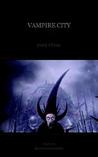
Halloween Reading: "Vampire City" by Paul Féval

Happy Halloween! I usually make a point of reading some classic gothic/mystery/horror fiction in October or November, but this year, my choice was a little more bizarre than usual. I read Vampire City, by Paul Féval, after acquiring it from my friend Stuart at his annual book-giveaway some months ago. I hadn't heard of Féval (a 19th-century French pulp novelist) or this book until Stuart brought it to my attention – and I'm always intrigued by books that complicate my understanding of French literature and the history of fiction in general.

So just in time for the spooky holiday, here's my Goodreads review of Vampire City by Paul Féval.

Vampire City
My rating: 3 of 5 stars

Vampire City is an obscure work of horror-comedy-metafiction written in France circa 1870, and if that description doesn't pique your interest, what are you doing on Goodreads?

Paul Féval imagines Ann Radcliffe, the English Gothic novelist, running away from home on the morning of her wedding day to rescue two of her childhood friends, who have gotten caught up in the schemes of a nefarious vampire. Féval's vampires glow green at nighttime, have their own civilization based in Vampire City, and can duplicate themselves. It's a far cry from the typical, Bram-Stoker-influenced vampire – although the section where Ann and her companions rely upon a vampire's victim to guide them to Vampire City is reminiscent of the end of Dracula, when Mina uses her telepathic connection with Dracula to guide the heroes to his castle.

The villain's scheme is a bit confusing and all of the characters are one-dimensional, but the tongue-in-cheek narration is full of gems like "Knowing themselves to be guilty of impropriety, Ned and Corny kept their intention [to elope] hidden from their friends. Please do not think me capable of excusing in any degree something which is not done, but I feel bound to point out that they had to contend with an unscrupulous fraudulent bankrupt, a female living in sin, and a vampire. It has to be admitted that their situation was difficult."

Not necessarily a must-read, but pretty entertaining, and an excellent reminder that the 19th century was far weirder and funnier than we usually imagine it to be.

View all my reviews

Sunday, October 17, 2010

Halloween Reading: "We Have Always Lived in the Castle"

I often try to read something scary around Halloween. For the past 2 years, I stuck with the classics: Frankenstein, Dracula. This year, I thought I'd probably read something like Dr. Jekyll & Mr. Hyde, but instead, ended up reading Shirley Jackson's 1962 novel We Have Always Lived in the Castle.

My friend Stuart recommended it to me, saying that I would love the narrator, Mary Katherine "Merricat" Blackwood. "She's 18 years old, she's beautiful, and she's a murderess!" said Stuart.

From this description I imagined that Merricat would be some kind of high-school femme-fatale or chilly blonde ice queen. It turns out that she's much more idiosyncratic, and much scarier, than that (and my friend may have misremembered the novel a bit... Merricat's older sister, Constance, is supposed to be the beautiful one). Merricat may be 18, but her development seems to have been arrested at age 12 or so... the same age as she was when her whole family, except for her sister Constance and her uncle Julian, died of arsenic poisoning.

As Jonathan Lethem writes in the introduction to my edition, Merricat is a "feral, presexual tomboy" with an unforgettable voice. She must be one of the best "unreliable narrators" of all time. Her story contains no supernatural horror elements like Dracula or Frankenstein, but I found it much creepier, and much more of a gripping read, than either of those novels. Perhaps it's creepy precisely because it is not supernatural; it is a frightening portrait of a psychologically damaged girl and her codependent relationship with her older sister.

We Have Always Lived in the Castle is definitely one of the best novels I've read this year, along with the similarly creepy and page-turning The Secret History, by Donna Tartt (my review). Interestingly, both Tartt and Jackson have ties to Bennington, VT; Jackson was married to a professor at Bennington College, and, 30 or so years later, Tartt was a student there. And both of these novels take place in a Bennington-like, northern New England setting. There must be something in the water up in Vermont...