- I interviewed Thrillpeddlers' Artistic Director, Russell Blackwood, about his company and their Paris-themed burlesque musical revue Jewels of Paris. I loved that when my editor received the Jewels of Paris press release, he took one look at it and said "this is definitely an assignment for Marissa!"
- Continuing the "Parisian avant-garde" theme, and tying in with Theater Pub's experimental April show, I wrote about the French playwrights' collective Outrapo -- the Workshop of Potential Tragicomedy -- and my attempts to get in touch with the Outrapistes when I was an exchange student in Paris in 2007.
- On the last day of April, I wrote about how my political beliefs and my tastes in theater aren't always 100% congruent; sometimes I feel like a bad feminist when I don't like a play that has a message I agree with... or when I enjoy a play that I know is politically iffy. This practice of reducing a work of art to its sociopolitical message seems pretty common in the two locales where I spend most of my time: in the SF Bay Area, and online. I yearn for criticism and conversation that explores other dimensions of works of art.
Wednesday, May 6, 2015
April on the Theater Pub Blog
The way the calendar for April 2015 shook out, I ended up writing 3 posts on the SF Theater Pub blog instead of my usual 2. Here's the links:

Sunday, April 26, 2015
"The Wilder Shores of Love": Romance and exoticism, what did you expect?
 The Wilder Shores of Love by Lesley Blanch
My rating: 3 of 5 stars
Believe it or not, I decided to read The Wilder Shores of Love because it got quoted in the J. Peterman catalogue next to an illustration of a fancy nightgown. And after reading the book, that doesn’t seem like a bad place for it. Like the J. Peterman catalogue, it is fanciful, romantic, ardent, and full of exoticism. It is seductive yet also a guilty pleasure, due to the way it traffics in outdated stereotypes about ethnicity and gender.
Lesley Blanch takes for her subjects four well-bred European women who discovered that their “destiny” lay in the Middle East. First is Isabel Burton, a devout Catholic girl who fell madly in love with Richard Burton, the dashing explorer and Orientalist. Posterity has reviled Isabel because she burned Richard’s notes and manuscripts after he died, but Blanch shows that she was more than just a prudish Victorian wife.
Next we learn about Jane Digby, a beautiful aristocrat who had a string of scandalous romances that took her from England to France to Germany to Greece, and who finally found stability and contentment as the wife of a Bedouin tribesman.
Then comes Aimée Dubucq de Rivery, a French girl who was shipwrecked, kidnapped by pirates, sold into the Ottoman Emperor’s harem, and eventually saw her son become Sultan. It was fun to read about the intrigues and treacheries of the Ottoman court, like a real-life version of Game of Thrones. But alas, this section of the book seems to be pure speculation. There is no conclusive proof that Aimée Dubucq became an Ottoman concubine, yet Blanch keeps discussing what Aimée “must have felt” or “might have done.”
The book finishes with the brief, febrile life of Isabelle Eberhardt, a Russian-Swiss woman who roamed around Algeria dressed as a man, taking many lovers and trying to become a Sufi mystic. Even though all of the women in this book led unconventional, adventurous lives, Eberhardt is the strangest and most complex, and I’m not sure that Lesley Blanch fully understands her. Burton, Digby, and Dubucq get slotted as the Passionate Wife, Sexual Amazon, and Sly Sultana, respectively; Eberhardt doesn’t fit into a box like that.
Blanch tries to explain Eberhardt by frequent references to her “melancholy Russian soul,” but to a 21st-century reader, that just sounds silly and stereotypical. So, too, do Blanch’s invocations of “Oriental cunning” or “Arab fatalism.” This book tells of four women whose love for the Middle East included large doses of romantic exoticism; but in reporting their stories, Blanch often falls into the traps of exoticism herself.
View all my reviews
Saturday, March 21, 2015
Artists Are Members of a Privileged Class @ SF Theater Pub Blog
I'm rereading Tom Stoppard's Travesties tonight (for a very cool reason which I am not yet at liberty to disclose) and I have to say that it makes for very interesting reading in light of what I wrote for the Theater Pub blog earlier this week.
My Theater Pub piece is about living in an age when "count your blessings" has turned into "check your privilege," acknowledging that being an artist is itself a privilege, and wondering if anything short of total social revolution will change that.
And then I start rereading a play in which Vladimir Lenin, James Joyce, and Tristan Tzara debate art and revolution with Henry Carr, a privileged British guy who'd rather talk about his Savile Row suits than about the carnage of World War I. Despite that, he gets in some rather trenchant commentary on art and privilege.
Some choice quotes from Travesties:
"To be an artist at all is like living in Switzerland during a world war." (Carr)
"Art created patrons and was corrupted. It began to celebrate the ambitions and acquisitions of the paymaster." (Tzara)
"Revolution in art is in no way connected with class revolution. Artists are members of a privileged class. Art is absurdly overrated by artists, which is understandable, but what is strange is that it's absurdly overrated by everyone else. [...] What is an artist? For every thousand people there's nine hundred doing the work, ninety doing well, nine doing good, and one lucky bastard who's the artist." (Carr)
My Theater Pub piece is about living in an age when "count your blessings" has turned into "check your privilege," acknowledging that being an artist is itself a privilege, and wondering if anything short of total social revolution will change that.
And then I start rereading a play in which Vladimir Lenin, James Joyce, and Tristan Tzara debate art and revolution with Henry Carr, a privileged British guy who'd rather talk about his Savile Row suits than about the carnage of World War I. Despite that, he gets in some rather trenchant commentary on art and privilege.
Some choice quotes from Travesties:
"To be an artist at all is like living in Switzerland during a world war." (Carr)
"Art created patrons and was corrupted. It began to celebrate the ambitions and acquisitions of the paymaster." (Tzara)
"Revolution in art is in no way connected with class revolution. Artists are members of a privileged class. Art is absurdly overrated by artists, which is understandable, but what is strange is that it's absurdly overrated by everyone else. [...] What is an artist? For every thousand people there's nine hundred doing the work, ninety doing well, nine doing good, and one lucky bastard who's the artist." (Carr)
Tuesday, March 17, 2015
The House of Mitford and the House of Black
As I mentioned, when I was up in Oregon last month, I holed up for several days at the Sylvia Beach Hotel. For my first four nights, I stayed in the Virginia Woolf room, which had a kind of French Provincial décor modeled after Woolf's country house, and on my last night I moved to the J. K. Rowling room. I worried that this room might feel too cartoonish and juvenile, but I actually LOVED it: it had a cozy canopy bed with red satin curtains, a beautiful antique drop-front desk, and plenty of memorabilia to make you feel like you're in Gryffindor Tower. I quickly got into the spirit of things, saying "Hello, Hedwig" to the plush snowy owl in its cage, and waving Hermione Granger's wand around while saying "Expecto Patronum!"
I also started re-reading Book 7 of Harry Potter, which I hadn't read since it came out. (Here's my post from August 2007 about my history with the Harry Potter series and my first impressions of Book 7.) At the same time, I was re-reading Hons and Rebels, Jessica Mitford's autobiography. (I first read it in May 2008.) I'd brought it to the coast with me because I sensed that on my Reading/Writing/Thinking retreat, it might be inspiring to read about a courageous, funny, rebellious woman. I also liked the connection that Jessica Mitford is J.K. Rowling's personal heroine (she named her first daughter "Jessica" in her honor).
Indeed, as I simultaneously re-read Harry Potter and the Deathly Hallows and Hons and Rebels, I spotted a detail in Rowling's book that I'm convinced was drawn from Mitford's. In the prologue to Hons and Rebels, Mitford writes, memorably, "In the windows [of my mother's house], still to be seen, are swastikas carved into the glass with a diamond ring, and for every swastika a carefully delineated hammer and sickle. They were put there by my sister Unity and myself when we were children." Later, she describes the room that she and Unity shared -- divided exactly down the middle, one half of it filled with Unity's Fascist memorabilia and literature, and the other half with Jessica's Communist stuff.
I couldn't help thinking of this when I got to Chapter 10 of Deathly Hallows, which describes the teenage bedrooms of Sirius Black and his brother Regulus at Grimmauld Place: "Sirius seemed to have gone out of his way to annoy his parents. There were several large Gryffindor banners, faded scarlet and gold, just to underline his difference from all the rest of the Slytherin family. There were many pictures of Muggle motorcycles, and also (Harry had to admire Sirius's nerve) several posters of bikini-clad Muggle girls." Meanwhile, "[though] Sirius had sought to advertise his difference from the rest of the family, Regulus had striven to emphasize the opposite. The Slytherin colors of emerald and silver were everywhere, draping the bed, the walls, and the windows. The Black family crest was painstakingly painted over the bed, along with its motto, Toujours Pur."
I need hardly point out that there's a connection between the Toujours Pur motto, Voldemort's ideas of magical blood purity, and Nazi racial ideology; nor that Gryffindor's colors, like Soviet Russia's, are scarlet and gold. In the scheme of the novel, Sirius Black basically is Jessica Mitford, and his cousins Bellatrix and Narcissa are basically Unity and Diana Mitford. (Bellatrix and Unity = mentally unstable, with a twisted, unrequited love for the Big Villain; Narcissa and Diana = beautiful cool blondes, married to the Big Villain's loyal lieutenant.)
It seems so obvious now, but I wouldn't have noticed it if I hadn't been re-reading Mitford and Rowling's books simultaneously -- in a canopy bed in a simulacrum of Gryffindor Tower.
I also started re-reading Book 7 of Harry Potter, which I hadn't read since it came out. (Here's my post from August 2007 about my history with the Harry Potter series and my first impressions of Book 7.) At the same time, I was re-reading Hons and Rebels, Jessica Mitford's autobiography. (I first read it in May 2008.) I'd brought it to the coast with me because I sensed that on my Reading/Writing/Thinking retreat, it might be inspiring to read about a courageous, funny, rebellious woman. I also liked the connection that Jessica Mitford is J.K. Rowling's personal heroine (she named her first daughter "Jessica" in her honor).
Indeed, as I simultaneously re-read Harry Potter and the Deathly Hallows and Hons and Rebels, I spotted a detail in Rowling's book that I'm convinced was drawn from Mitford's. In the prologue to Hons and Rebels, Mitford writes, memorably, "In the windows [of my mother's house], still to be seen, are swastikas carved into the glass with a diamond ring, and for every swastika a carefully delineated hammer and sickle. They were put there by my sister Unity and myself when we were children." Later, she describes the room that she and Unity shared -- divided exactly down the middle, one half of it filled with Unity's Fascist memorabilia and literature, and the other half with Jessica's Communist stuff.
I couldn't help thinking of this when I got to Chapter 10 of Deathly Hallows, which describes the teenage bedrooms of Sirius Black and his brother Regulus at Grimmauld Place: "Sirius seemed to have gone out of his way to annoy his parents. There were several large Gryffindor banners, faded scarlet and gold, just to underline his difference from all the rest of the Slytherin family. There were many pictures of Muggle motorcycles, and also (Harry had to admire Sirius's nerve) several posters of bikini-clad Muggle girls." Meanwhile, "[though] Sirius had sought to advertise his difference from the rest of the family, Regulus had striven to emphasize the opposite. The Slytherin colors of emerald and silver were everywhere, draping the bed, the walls, and the windows. The Black family crest was painstakingly painted over the bed, along with its motto, Toujours Pur."
I need hardly point out that there's a connection between the Toujours Pur motto, Voldemort's ideas of magical blood purity, and Nazi racial ideology; nor that Gryffindor's colors, like Soviet Russia's, are scarlet and gold. In the scheme of the novel, Sirius Black basically is Jessica Mitford, and his cousins Bellatrix and Narcissa are basically Unity and Diana Mitford. (Bellatrix and Unity = mentally unstable, with a twisted, unrequited love for the Big Villain; Narcissa and Diana = beautiful cool blondes, married to the Big Villain's loyal lieutenant.)
It seems so obvious now, but I wouldn't have noticed it if I hadn't been re-reading Mitford and Rowling's books simultaneously -- in a canopy bed in a simulacrum of Gryffindor Tower.
Friday, March 6, 2015
Three Brief Reviews of Three Brief Books
Hello! Apologies for my long absence. In mid-February, I was off the grid on a week-long vacation; and for the past two weeks, I've been trying to recover from a lingering head cold.
On my vacation, I stayed at the literary-themed Sylvia Beach Hotel on the Oregon coast, in the Virginia Woolf and J.K. Rowling rooms -- so naturally, I found myself reading the books that were on hand there.
I'm also participating in a year-long book-reading contest with some friends, and every little bit counts...
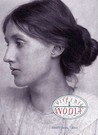 Virginia Woolf by Mary Ann Caws
My rating: 2 of 5 stars
In this short bio, Mary Ann Caws depicts Virginia Woolf as an enthusiastic, thoughtful woman who cherished her friends -- counter-balancing the stereotypical image of Woolf as depressed and suicidal. But in so doing, Caws neglects Woolf's work as a novelist and essayist, which, after all, is what made her famous and why we still care about her. If I recall correctly, this book mentions Mrs. Dalloway only in passing and doesn't discuss A Room of One's Own at all, and those are two of Woolf's most notable works. Instead, it feels like most of the book describes the bohemian habits and complicated relationships of the Bloomsbury Group. One perk of this book is that it's lavishly illustrated with vintage photos of all of the people it mentions. But ultimately, it gives you a much better sense of Woolf's milieu than of her own life or her writing.
 The Tales of Beedle the Bard by J.K. Rowling
My rating: 3 of 5 stars
As literary fairy tales, the five Tales of Beedle the Bard are far from the most interesting ones I've ever read -- some of them wear their influences too obviously, e.g. "Babbitty Rabbitty" is clearly modeled on "The Emperor's New Clothes." But it's always charming to spend time in the Wizarding World, especially in the company of the beloved Albus Dumbledore, who provides criticism and commentary on each of the five tales. The most interesting element of this book is the "Postmodernism for Kids" aspect of it: it is presented as being written hundreds of years ago by Beedle the Bard, translated recently by Hermione Granger, with Dumbledore's commentary, an introduction by J.K. Rowling, and footnotes by both Dumbledore and Rowling. If I ever have children, I might want to give them this book as an introduction to concepts like intertextuality, literary criticism, subtext, metafiction, etc.
 Now All We Need is a Title: Famous Book Titles and How They Got That Way by André Bernard
My rating: 2 of 5 stars
Did you know that John Steinbeck originally wanted to give Of Mice and Men the laughably bad title Something That Happened? Or that both Dorothy Parker and Dashiell Hammett's publisher thought that The Maltese Falcon was a terrible title? Those pieces of title-related trivia, and many more, can be found in this little compendium. One can see how this kind of book would be more useful before the Internet existed (nowadays this would be a Buzzfeed list, not a book), and it feels like the publisher had to pad it out to even get it to be over 100 pages, but it's nice to be reminded that while certain famous book titles may sound inevitable to us now, some of them were anything but.
View all my reviews
On my vacation, I stayed at the literary-themed Sylvia Beach Hotel on the Oregon coast, in the Virginia Woolf and J.K. Rowling rooms -- so naturally, I found myself reading the books that were on hand there.
I'm also participating in a year-long book-reading contest with some friends, and every little bit counts...
Virginia Woolf by Mary Ann CawsMy rating: 2 of 5 stars
In this short bio, Mary Ann Caws depicts Virginia Woolf as an enthusiastic, thoughtful woman who cherished her friends -- counter-balancing the stereotypical image of Woolf as depressed and suicidal. But in so doing, Caws neglects Woolf's work as a novelist and essayist, which, after all, is what made her famous and why we still care about her. If I recall correctly, this book mentions Mrs. Dalloway only in passing and doesn't discuss A Room of One's Own at all, and those are two of Woolf's most notable works. Instead, it feels like most of the book describes the bohemian habits and complicated relationships of the Bloomsbury Group. One perk of this book is that it's lavishly illustrated with vintage photos of all of the people it mentions. But ultimately, it gives you a much better sense of Woolf's milieu than of her own life or her writing.
The Tales of Beedle the Bard by J.K. RowlingMy rating: 3 of 5 stars
As literary fairy tales, the five Tales of Beedle the Bard are far from the most interesting ones I've ever read -- some of them wear their influences too obviously, e.g. "Babbitty Rabbitty" is clearly modeled on "The Emperor's New Clothes." But it's always charming to spend time in the Wizarding World, especially in the company of the beloved Albus Dumbledore, who provides criticism and commentary on each of the five tales. The most interesting element of this book is the "Postmodernism for Kids" aspect of it: it is presented as being written hundreds of years ago by Beedle the Bard, translated recently by Hermione Granger, with Dumbledore's commentary, an introduction by J.K. Rowling, and footnotes by both Dumbledore and Rowling. If I ever have children, I might want to give them this book as an introduction to concepts like intertextuality, literary criticism, subtext, metafiction, etc.
Now All We Need is a Title: Famous Book Titles and How They Got That Way by André BernardMy rating: 2 of 5 stars
Did you know that John Steinbeck originally wanted to give Of Mice and Men the laughably bad title Something That Happened? Or that both Dorothy Parker and Dashiell Hammett's publisher thought that The Maltese Falcon was a terrible title? Those pieces of title-related trivia, and many more, can be found in this little compendium. One can see how this kind of book would be more useful before the Internet existed (nowadays this would be a Buzzfeed list, not a book), and it feels like the publisher had to pad it out to even get it to be over 100 pages, but it's nice to be reminded that while certain famous book titles may sound inevitable to us now, some of them were anything but.
View all my reviews
Sunday, February 8, 2015
Moved to Tears @ San Francisco Theater Pub Blog
My latest Theater Pub column is about the works of art that make me cry -- something I don't think we talk about enough, in an era that is skeptical of raw emotion. Click over there and read my piece to learn why I made sure to bring a hankie to the performance of Candide I saw last week and how seeing The King and I at the age of 5 utterly ruined me.
(My friend/editor Stuart noted "I think you're the only non-Asian person I know who was traumatized by The King and I... and most of them were traumatized for very different reasons.")

I've also convinced myself that Howard Ashman and Alan Menken must've modeled elements of Beauty and the Beast, especially the ballroom dancing scene, after The King and I -- they were no dummies and, as we all know, "good artists borrow, great artists steal."

In my column, I also mention seeing Rabbit Hole at the Oregon Shakespeare Festival when I was in college -- which happened to be the subject of one of my very first blog posts. Crazy to realize that that was almost 8 years ago (also crazy that I haven't been back to Ashland since then, but that's a topic for another day).
(My friend/editor Stuart noted "I think you're the only non-Asian person I know who was traumatized by The King and I... and most of them were traumatized for very different reasons.")
I've also convinced myself that Howard Ashman and Alan Menken must've modeled elements of Beauty and the Beast, especially the ballroom dancing scene, after The King and I -- they were no dummies and, as we all know, "good artists borrow, great artists steal."
In my column, I also mention seeing Rabbit Hole at the Oregon Shakespeare Festival when I was in college -- which happened to be the subject of one of my very first blog posts. Crazy to realize that that was almost 8 years ago (also crazy that I haven't been back to Ashland since then, but that's a topic for another day).
Sunday, February 1, 2015
Miss Fisher and Miss Crewe
In my most recent Theater Pub column, I wrote about some of the non-theater things that kept me sane/happy/entertained in January: the f.lux app, trying new hairdos, cleaning my room, and watching Miss Fisher's Murder Mysteries on Netflix.
I saw some enjoyable theater, too: Indian Ink at ACT is a good play in a lovely production. Though Arcadia will always be my all-time favorite Stoppard, this one is still smart and entertaining and well worth your time.
And I got to thinking about how Flora Crewe, the heroine of Indian Ink, and Phryne Fisher, the title character of Miss Fisher's Murder Mysteries, feel like variations on an archetype: confident, independent-minded, adventurous women of the between-the-wars period. They pursue careers that aren't quite "respectable" (Flora is a poet, Phryne a private detective), but which still allow them to dress glamorously and mingle with interesting people. Flora gets denigrated as an empty-headed "flapper poet" and Phryne gets patronized as a meddlesome amateur, but they do their best to shake off such criticisms and go on with being their awesome selves. They are single but have many lovers; they are not ashamed of their sexuality. They are very fond of stylish automobiles.
Their biographical details are similar too. Indian Ink gives Flora's birth year as 1895; she is 35 when the play takes place in 1930. The Miss Fisher show takes place in 1928 Melbourne, at which time Phryne seems to be in her mid-to-late 30s. (Per Wikipedia, Phryne's birth year is 1900, so she's 28 when we meet her, but maybe that's just for the novels the TV show is based on -- actress Essie Davis is great and looks younger than her real age, but I don't think she can pass for 28.) They both have a beloved younger sister, though Phryne's sister was murdered in childhood while Flora's sister is alive and well. After spending childhood and adolescence in an English-speaking country (England/Australia), they run off to France during World War I and join an ambulance unit. They both remain in France for a bit after the war ends, too, living the bohemian life in Paris and working as artists' models.
Here's where the parallels get really crazy. In Paris, Flora poses nude for Modigliani and when the painting is later exhibited, it infuriates her fiancé so much that he buys it and burns it in a bathtub at the Ritz. Phryne poses nude for a fictitious artist, Pierre Sarcelle, which infuriates her lover so much that he resorts to murder to get his hands on the painting. Okay, I can understand how this is a trope (jealous sexist man commits violence when he learns his girlfriend has posed nude for someone else), but it was very odd to see Indian Ink and the Miss Fisher episode about the nude painting less than a week apart, and to note all of these similarities in terms of character, era, etc.
Are both Flora Crewe and Phryne Fisher based on a real-life woman that I should know about? Is there some well-known story about a young Anglo woman who drove an ambulance in France during World War I, then posed for a nude painting that was later at the center of some scandal?
And, to compound the hall-of-mirrors effect, I first became aware of the Miss Fisher actress Essie Davis when I saw her star in a different Tom Stoppard play, Jumpers, on Broadway in 2004. (Her character had a nude scene in that one, too. Stoppard has a reputation as a super-cerebral playwright but there's enough female nudity written into his scripts -- Jumpers, Indian Ink, Coast of Utopia -- that it seems he also has quite an eye for the ladies.)
At any rate, I have two new fictional heroines to inspire me with their independence, courage, and flair.
I saw some enjoyable theater, too: Indian Ink at ACT is a good play in a lovely production. Though Arcadia will always be my all-time favorite Stoppard, this one is still smart and entertaining and well worth your time.
 |
| Brenda Meaney as Flora Crewe, in ACT's production of Indian Ink. Photo by Kevin Berne. |
And I got to thinking about how Flora Crewe, the heroine of Indian Ink, and Phryne Fisher, the title character of Miss Fisher's Murder Mysteries, feel like variations on an archetype: confident, independent-minded, adventurous women of the between-the-wars period. They pursue careers that aren't quite "respectable" (Flora is a poet, Phryne a private detective), but which still allow them to dress glamorously and mingle with interesting people. Flora gets denigrated as an empty-headed "flapper poet" and Phryne gets patronized as a meddlesome amateur, but they do their best to shake off such criticisms and go on with being their awesome selves. They are single but have many lovers; they are not ashamed of their sexuality. They are very fond of stylish automobiles.
Their biographical details are similar too. Indian Ink gives Flora's birth year as 1895; she is 35 when the play takes place in 1930. The Miss Fisher show takes place in 1928 Melbourne, at which time Phryne seems to be in her mid-to-late 30s. (Per Wikipedia, Phryne's birth year is 1900, so she's 28 when we meet her, but maybe that's just for the novels the TV show is based on -- actress Essie Davis is great and looks younger than her real age, but I don't think she can pass for 28.) They both have a beloved younger sister, though Phryne's sister was murdered in childhood while Flora's sister is alive and well. After spending childhood and adolescence in an English-speaking country (England/Australia), they run off to France during World War I and join an ambulance unit. They both remain in France for a bit after the war ends, too, living the bohemian life in Paris and working as artists' models.
 |
| Essie Davis as Phryne Fisher. |
Here's where the parallels get really crazy. In Paris, Flora poses nude for Modigliani and when the painting is later exhibited, it infuriates her fiancé so much that he buys it and burns it in a bathtub at the Ritz. Phryne poses nude for a fictitious artist, Pierre Sarcelle, which infuriates her lover so much that he resorts to murder to get his hands on the painting. Okay, I can understand how this is a trope (jealous sexist man commits violence when he learns his girlfriend has posed nude for someone else), but it was very odd to see Indian Ink and the Miss Fisher episode about the nude painting less than a week apart, and to note all of these similarities in terms of character, era, etc.
Are both Flora Crewe and Phryne Fisher based on a real-life woman that I should know about? Is there some well-known story about a young Anglo woman who drove an ambulance in France during World War I, then posed for a nude painting that was later at the center of some scandal?
And, to compound the hall-of-mirrors effect, I first became aware of the Miss Fisher actress Essie Davis when I saw her star in a different Tom Stoppard play, Jumpers, on Broadway in 2004. (Her character had a nude scene in that one, too. Stoppard has a reputation as a super-cerebral playwright but there's enough female nudity written into his scripts -- Jumpers, Indian Ink, Coast of Utopia -- that it seems he also has quite an eye for the ladies.)
At any rate, I have two new fictional heroines to inspire me with their independence, courage, and flair.
Subscribe to:
Posts (Atom)